Apple Tree Bark Splitting: Repairing Apple Bark Damage
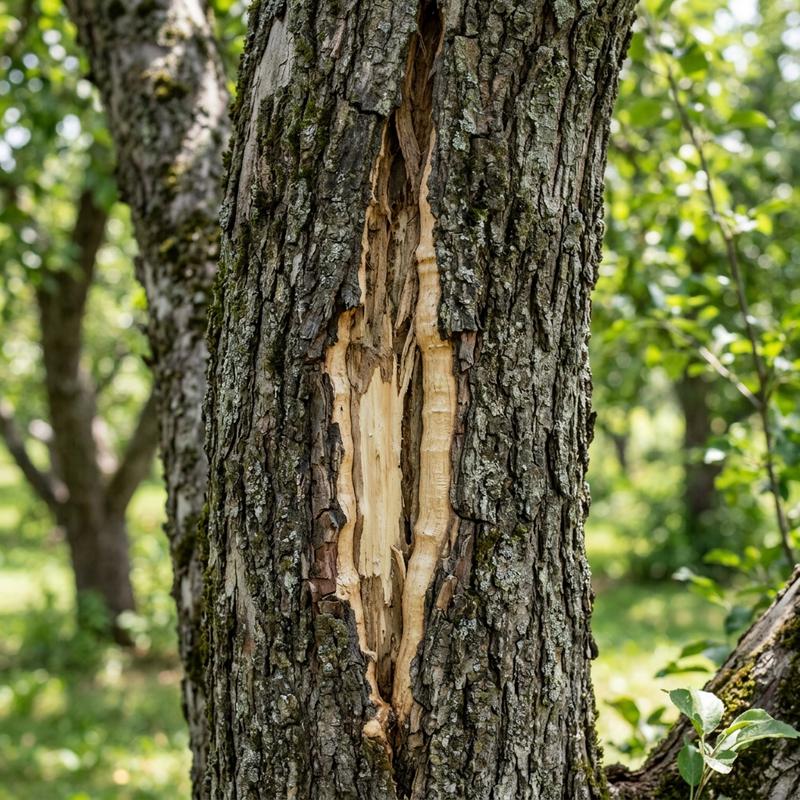
Losing, peeling, or splitting bark from an apple tree can look extremely alarming. However, the significance of **apple tree bark splitting** varies depending on the root cause and location of the **apple tree bark damage**. While some minor bark loss is normal as a tree ages, other splits like a **frost crack on an apple tree** require prompt treatment to prevent infections.
Is Peeling Bark on an Apple Tree Normal?
As apple trees mature, the outer layers of bark naturally crack, curl and peel away in irregular plates, revealing slightly smoother, lighter bark underneath. This is entirely normal in trees over ten to fifteen years old and requires no action. The underlying wood is sound and the tree is healthy. The natural shedding of older bark actually removes some overwintering insect eggs and fungal spores, which is beneficial.
Causes of Apple Tree Bark Splitting and Cracking
Canker causes sunken, dead areas of bark that crack, dry out, and eventually fall away, leaving a distinctive sunken crater in the branch. The exposed wood is dry, orange-brown and dead rather than the healthy, living wood visible under natural bark peel. See the apple canker page for full diagnosis and treatment. Infected wood must be cut out cleanly to prevent the canker from spreading further around the branch.
How to Prevent Frost Cracks and Winter Bark Damage
A sudden severe frost following a mild spell — particularly a rapid temperature drop overnight after a warm day — can cause the bark and outer wood to contract suddenly and split. Frost cracks are usually long, vertical splits on the trunk or main branches. The exposed wood is healthy-looking. The crack may close and callus over in following seasons; protect the wound from canker entry by cleaning the edges with a sharp knife and applying wound sealant. Frost cracks are more common in exposed sites and on trees that have been heavily watered or fertilised late in the season (which delays hardening off).
Treating Split Bark and Fungal Bark Infections
When roots are killed by prolonged waterlogging, the bark on the trunk and lower branches may peel and slough off as the phloem (the living inner bark layer) dies due to lack of water and nutrient supply. This is a serious condition and the bark loss may be a sign the tree is in terminal decline if the waterlogging has been prolonged. Improve drainage urgently if this is the cause.
Assess and protect your apple tree's bark health
The SelfEcoFarm apple guide covers the apple tree health assessment approach and management responses to canker, frost damage, waterlogging and normal ageing.
Get the apple guide