Apple Tree Biennial Bearing: Break the Alternate Year Crop Cycle
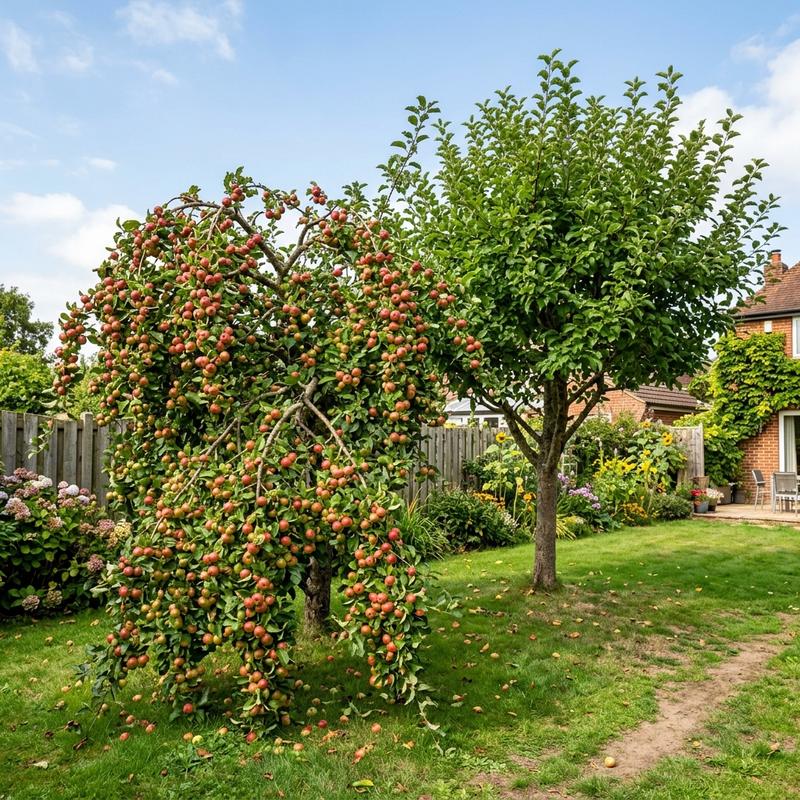
An apple tree that produces an enormous, exhausting crop one year and virtually nothing the next — commonly known as **apple tree biennial bearing** — is a frustrating pattern. If you have **biennial bearing apple trees**, understanding the root causes is the first step. The good news is that you can learn **how to break biennial bearing** permanently and stop this **alternative year cropping on your apple tree**.
What Causes Biennial Bearing on Apple Trees?
Apple flower buds for next year are initiated in summer, at the same time as the current year's fruit is developing. When a tree carries an excessively heavy crop, the developing fruit produces hormones (primarily gibberellins) that suppress flower bud initiation in the rest of the tree. The result: the tree sets a huge crop this year but forms almost no flower buds for next year. The following year, with no fruit to suppress bud formation, the tree sets flower buds prolifically and the cycle repeats. One overloaded year establishes a cycle that continues year after year without intervention.
How to Break Biennial Bearing with Aggressive Thinning
The intervention must happen in the heavy year, before the developing fruit suppresses bud formation. In June, after natural June drop has finished, hand-thin the crop aggressively — more aggressively than you would thin for fruit size alone. Reduce each cluster to one fruit, and space fruits at least 15 cm apart across the whole tree. By reducing the total fruit load and the associated hormonal suppression, you allow the tree to initiate flower buds for the following year normally, breaking the cycle. The thinned year's crop will be smaller but of better individual quality, and the following year's crop will be normal rather than absent.
Choosing Apple Varieties Resistant to Alternative Year Cropping
Some varieties are naturally more prone to biennial bearing than others. Bramley Seedling, Blenheim Orange and many older traditional varieties are strongly biennial unless actively managed by thinning. Cox, Egremont Russet and most modern commercial varieties are less prone. If you have a strongly biennial variety, annual June thinning is essential maintenance rather than optional.
Convert your biennial apple tree to reliable annual cropping
The SelfEcoFarm apple guide covers the fruit thinning method, timing and management approach for breaking the biennial bearing cycle and achieving consistent harvests every year.
Get the apple guide