How to Prevent Apple Bitter Pit (Foliar Calcium Spray Guide)
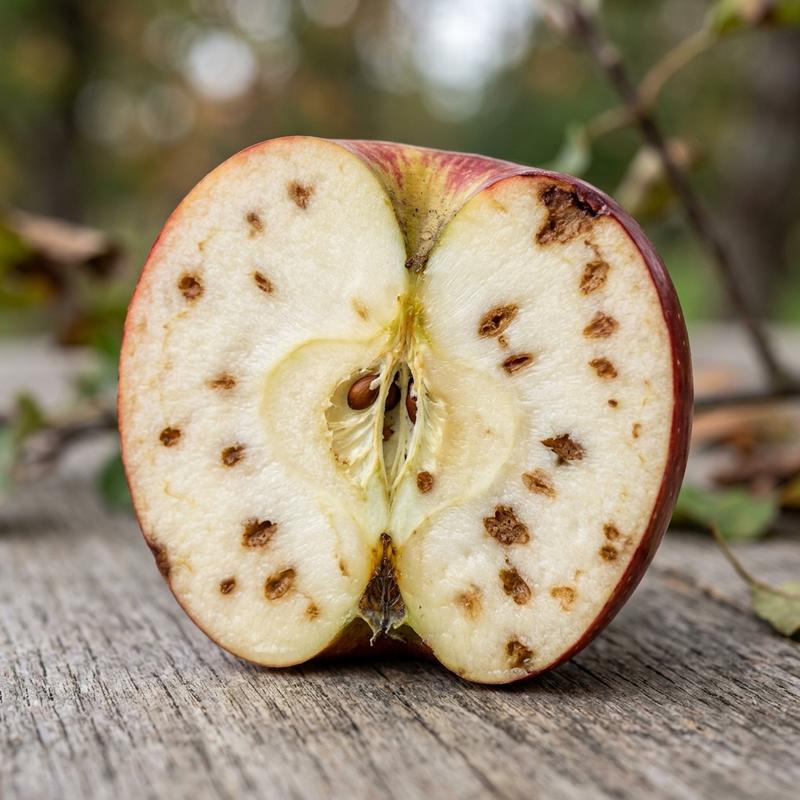
Small, brown, slightly sunken pits in the flesh of apples — commonly known as apple bitter pit — are the defining symptoms of this frustrating issue. Bitter pit in apples is not caused by a pest or pathogen but by a physiological disorder: a localised calcium deficiency in apples that causes cells to die and form the characteristic brown spots in apples. The disorder develops in the fruit during the growing season but symptoms may not be fully visible until storage.
Why Calcium Deficiency in Apples Causes Bitter Pit
The soil may not be low in calcium — bitter pit frequently occurs in soil with perfectly adequate calcium levels. The problem is calcium transport within the tree. Calcium moves through the tree primarily in the water stream (xylem flow), and developing fruit has very low transpiration — it draws relatively little water compared to leaves. During periods of drought stress, uneven watering, or when the crop is very large, the competition between fruit and leaves for the available calcium supply is won by the leaves (which transpire actively and draw calcium constantly). The fruit receives insufficient calcium to maintain normal cell function in its outer layers.
Foliar Calcium Sprays: The Best Bitter Pit Treatment
Apply calcium nitrate or calcium chloride solution (0.4–0.6% concentration) as a foliar spray directly onto the developing fruit, starting three to four weeks after petal fall and repeating every two to three weeks through fruit development — typically four to six applications through the season. This delivers calcium directly to the fruit surface and bypasses the soil-to-root-to-fruit transport pathway entirely. This is the most reliable prevention available. Calcium chloride is slightly more effective at reaching the fruit but may cause skin russeting on some varieties — test on a small area first.
Preventing Brown Spots in Apples via Watering & Soil Care
Consistent soil moisture prevents the drought stress that disrupts calcium transport. Mulch deeply and water regularly during dry periods from fruitlet set through to harvest. Irregular wet-dry cycles are the most common management factor that exacerbates bitter pit.
Choosing Apple Varieties Resistant to Bitter Pit
Cox, Bramley, Jonagold and Egremont Russet are among the most bitter-pit susceptible varieties. Varieties with large fruit are more susceptible than small-fruited types — larger cells are more calcium-hungry.
Prevent bitter pit with a calcium spray programme
The SelfEcoFarm apple guide covers the complete calcium management approach — spray timing, rates, watering and soil management — for producing apples free from bitter pit.
Get the apple guide