Apple Tree Branch Split: Repairing and Supporting Split Branches
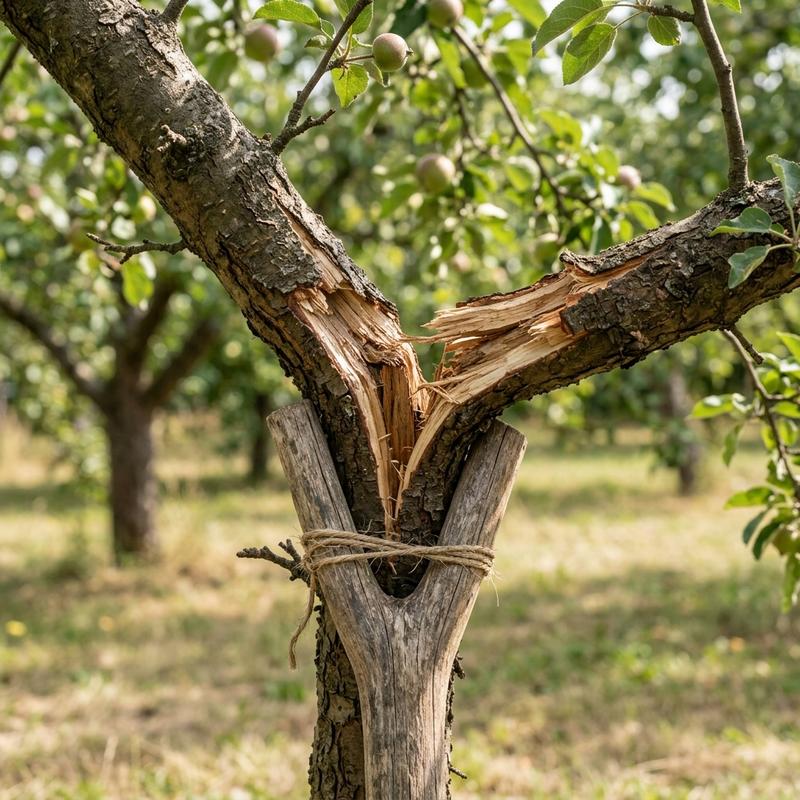
Apple branches that split represent serious structural damage. Whether you have an **apple tree branch split** along its length, or a major limb tearing away from the trunk, immediate action is required. Learning how to **repair a split apple branch** and how to support **sagging apple branches** is essential for **apple tree branch repair** and protecting the tree's overall structural health.
How to Repair a Split Apple Branch Under Crop Load
In a very heavy fruiting year, the weight of hundreds of apples on a single branch can exceed the branch's structural capacity, particularly if the branch is growing at a wide angle from the trunk (more than 60 degrees) or has a co-dominant double stem with a narrow, bark-included crotch. In the middle of summer, a heavily laden branch may split at the crotch or along the main branch. Immediate action: support the split branch from below with a forked stake or tie it back to the trunk with a broad rubber strap. Reduce the fruit load on the damaged branch immediately to remove the weight. Clean the split edges with a sharp knife and apply wound sealant.
Weak Branch Crotch Angles Causing Wood Splits
Branches that grow at a narrow angle to the trunk — less than 30–40 degrees — form a weak, compressed joint with bark included between the two stems. These narrow-angle crotches are inherently structurally weak and susceptible to splitting as the branch grows heavier with age. When a young tree is being trained, train branches with wider angles (45–60 degrees) using spreaders or ties; remove any co-dominant stems with included bark before they develop into major branches.
Preventative Pruning and Propping for Sagging Apple Branches
A canker lesion that has expanded to girdle most of a branch's circumference kills the wood and bark, leaving the branch structurally weakened — a point of likely failure in high wind or under load. Remove any branch that is more than 50% girdled by canker rather than trying to save it; the risk of sudden, uncontrolled failure is significant. For healthy but overloaded branches, prop them with sturdy Y-poles or tie them securely before they have a chance to sag and split.
Protect your apple tree's structure from damage and failure
The SelfEcoFarm apple guide covers the structural training, crop load management and emergency response approach for keeping apple tree branches strong and productive.
Get the apple guide