Brown Inside Apples: Causes of Internal Browning and Core Rot
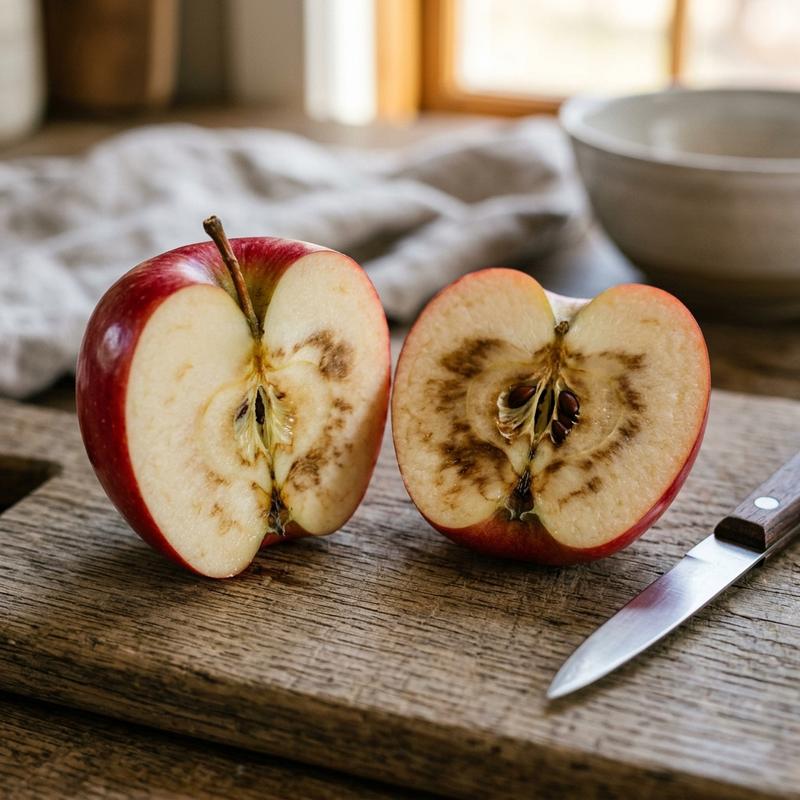
Cutting open a perfectly good-looking apple to find discoloured patches is a frustrating problem. Having fruit that is **brown inside apples** when the skin appears completely normal is common. Several different factors cause **internal browning in apples** or an **apple core brown** section. Identifying the cause helps prevent **core rot in apples** and tells you if the fruit is still safe to eat.
Calcium Deficiency and Internal Browning in Apples
Bitter pit produces small, brown, slightly sunken cavities in the flesh, concentrated just below the skin surface on the shoulder end of the fruit. Affected flesh tastes bitter. It is caused by insufficient calcium reaching the developing fruit — not necessarily low soil calcium, but disrupted calcium transport caused by uneven watering, excessive nitrogen or potassium fertiliser, or irregular fruit development. Foliar calcium sprays (calcium nitrate or calcium chloride) applied at fruitlet stage and repeated several times through fruit development significantly reduce bitter pit incidence.
Fungal Core Rot in Apples (Mouldy Core Disease)
Core rot is caused by fungi entering the fruit through the open calyx end (the remnant of the flower at the base of the fruit) and growing inward toward the core. The flesh around the core develops brown, often mouldy areas while the rest of the fruit looks and feels normal. The calyx end is the entry point — varieties with an open calyx tube are most susceptible. Affected fruit is safe to eat if the brown area is removed, but core rot spreads in storage, so use affected fruit promptly.
Incorrect Storage Temperatures Causing Brown Inside Apples
Apples stored in conditions that are too cold (below 2°C for many varieties), too warm, or with incorrect atmospheric composition can develop internal browning — a physiological condition where the fruit's cells die and turn brown while the skin remains intact. This is a storage disorder rather than a disease. Store apples at 3–4°C (never frozen), in a cool but not freezing environment, and check regularly.
Insect Tunneling Leading to Internal Fruit Browning
Codling moth larvae create a tunnel leading from the skin surface to the core. The tunnel and surrounding flesh show brown discolouration. Unlike bitter pit or core rot, codling moth damage is a clearly defined tunnel, often with frass, leading directly to the seed cavity.
Produce clean, sound apples with the right growing approach
The SelfEcoFarm apple guide covers the calcium management, storage conditions and pest control that prevents internal browning and produces high-quality apples from tree to table.
Get the apple guide