Apple Tree Canker Treatment: Cure Bark Disease on Apple Trees
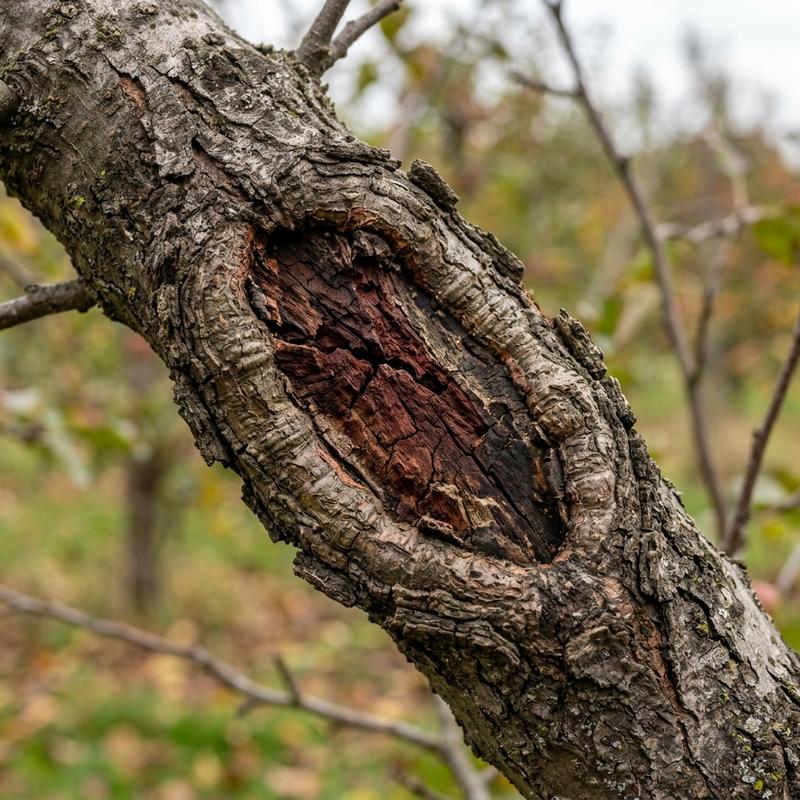
Sunken, cracked, discoloured areas of bark on apple tree branches or the trunk — sometimes weeping a reddish-brown liquid — are the classic symptoms of **apple tree canker**. Caused by the fungus *Neonectria ditissima* (formerly *Nectria galligena*), this serious **bark disease on apple trees** attacks the wood itself. Without proper **apple tree canker treatment** or removal, the fungal infection will girdle branches and kill the entire tree, especially in damp or wet climates.
Identifying Fungal Canker on Apple Trees
Look for sunken, elliptical lesions in the bark, with the surrounding bark cracking and peeling away to reveal dead, reddish-brown or orange-brown wood underneath. The bark surface may show small, cream-coloured or red cushion-like spore-producing bodies in the lesion margins. In winter, the dead area may be surrounded by a raised, callus-like border where the tree is attempting to wall off the infection. As the canker expands around the branch, it eventually girdles it — the wood beyond the canker dies and the branch fails to produce leaves in spring.
How Apple Canker Spreads and Infects Bark
The canker fungus enters the tree through pruning cuts, damaged bark, scab lesions, frost damage, and leaf scars. It is most active in autumn and winter, with spore release during wet weather. Trees growing in wet, poorly drained sites, or with heavy scab infections (which create many entry points), are significantly more susceptible than trees in well-drained conditions with good disease management.
Pruning Cuts and Tools for Apple Tree Canker Treatment
The only effective treatment is physical removal of infected wood. Use a sharp, clean knife or pruning saw to cut back to completely clean, healthy wood — the cut surface should show no discolouration. For small lesions on large branches, cut out the lesion with a clean knife, removing all infected tissue plus 2–3 cm of healthy wood around it. Disinfect tools between cuts with a dilute bleach or Jeyes fluid solution. Seal large wounds with wound paint. On small branches, cut the branch off entirely below the lesion.
Preventative Care to Stop Apple Bark Diseases
Plant in well-drained soil. Prune in dry weather to minimise wound infection. Manage scab to reduce entry points. Choose resistant varieties — Cox is particularly susceptible; Bramley and many modern varieties show much better canker resistance.
Protect your apple tree from canker damage
The SelfEcoFarm apple guide covers the canker identification, removal, site management and variety selection approach for healthy, long-lived apple trees.
Get the apple guide