Apple Tree Fire Blight: Identifying and Treating Blight Symptoms
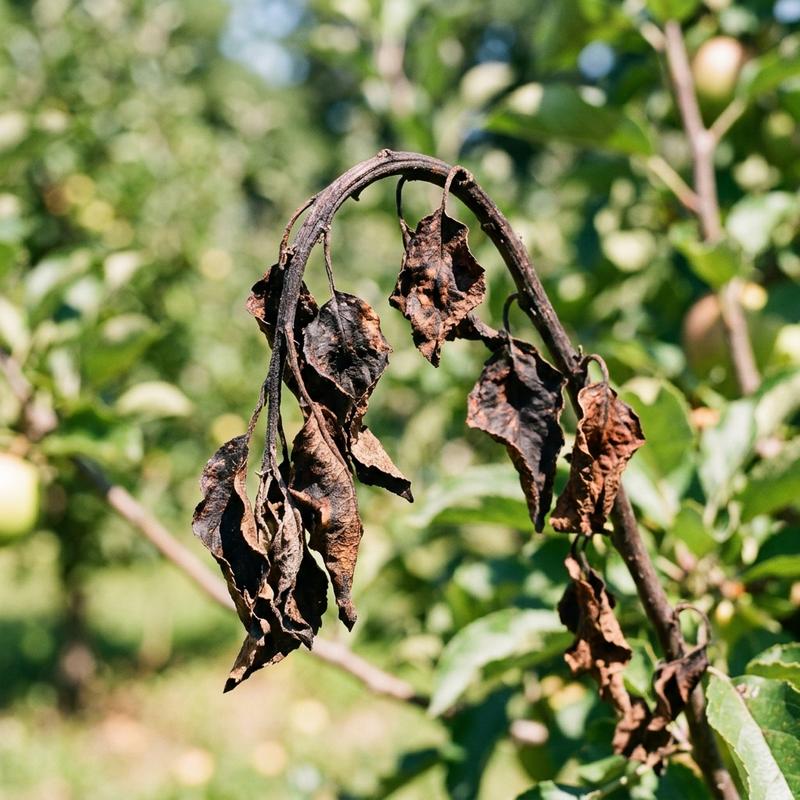
Fire blight (Erwinia amylovora) is a highly destructive bacterial disease affecting apples, pears, and roses. Spotting early fireblight symptoms is essential, as the infection spreads with devastating speed in warm, humid weather. Proper apple tree fire blight management is critical; without immediate pruning treatment, curing fire blight in apples becomes impossible, leading to complete tree death within a single season.
Recognizing Active Fireblight Symptoms on Apple Trees
Look for: shoots that wilt and die rapidly (days, not weeks), with dead leaves remaining attached rather than dropping; the shoot tip bent downward in a shepherd's crook shape; a reddish-brown discolouration visible if you cut the shoot — the discolouration extends in streaks into the healthy wood below the visible dead area; in humid conditions, a milky bacterial ooze may appear on infected bark surfaces. The spread through a branch happens rapidly, with the bacterial infection moving downward through the vascular system.
Emergency Fire Blight Treatment and Pruning Protocol
Remove infected shoots immediately. Cut at least 30–45 cm below the lowest visible sign of infection — the bacteria extend further into the wood than the visible dead area. After every single cut, disinfect the cutting tool by dipping in a solution of one part bleach to nine parts water, or 70% methylated spirits. Do not compost removed material — burn it or dispose of in household waste. Working on a dry day (rain spreads bacteria) and avoiding over-pruning of the remaining tree (which stimulates the soft growth most susceptible to infection) are both important.
Environmental Conditions That Favour Bacterial Blight Spread
Fire blight thrives in warm temperatures (24–29°C), high humidity and wet, windy conditions during flowering — the main infection window is at blossom time when the bacteria enter through open flowers. Avoid overhead irrigation during flowering, excess nitrogen fertiliser (which produces the soft, lush growth most susceptible to infection), and unnecessary wounding of the tree during the growing season.
Choosing Apple Varieties Resistant to Fire Blight
Fire blight resistance varies enormously between varieties. Fiesta, Discovery and Greensleeves have some resistance; Cox is highly susceptible. In areas with high fire blight pressure, variety choice is one of the most important protective factors.
Protect your apple tree from fire blight
The SelfEcoFarm apple guide covers the fire blight identification, emergency response protocol and long-term management approach that protects your apple tree in high-risk conditions.
Get the apple guide