Why Are My Apples Falling Off the Tree Early? Causes and Solutions
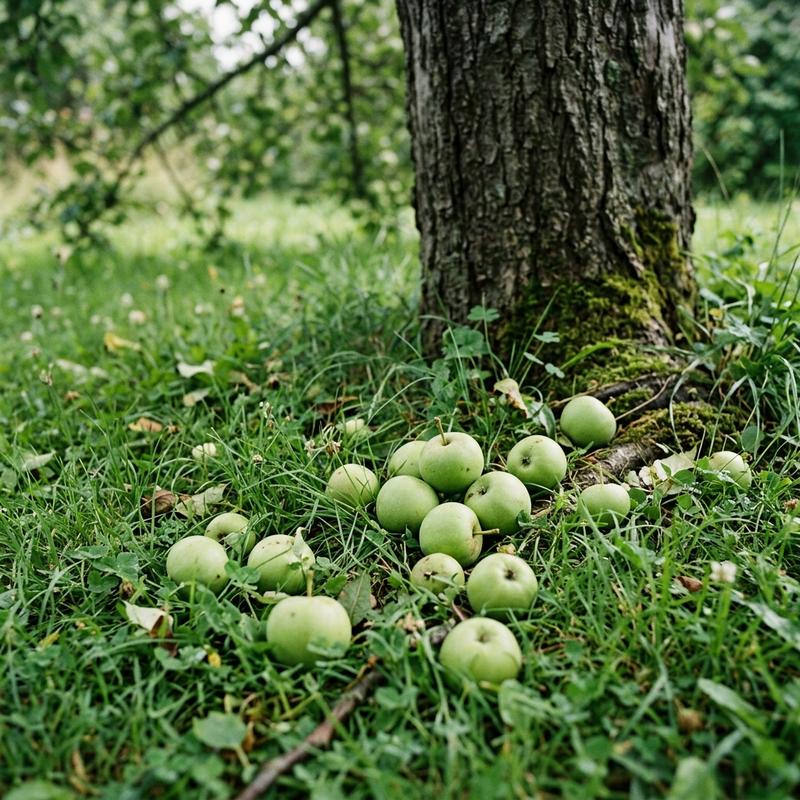
Finding a carpet of small, immature apples under your tree in early to midsummer is a disappointing sight. If you are asking **why are my apples falling off early** or why they are **falling off the tree early**, the timing and condition of the fallen fruit are the key to diagnosis. Some premature drop is a normal part of the **june drop in apple trees**, while other causes indicate pest damage, disease, or stress that requires **preventing premature apple drop**.
Natural June Drop in Apple Trees
In early to midsummer (often June in the UK), apple trees naturally shed a proportion of their fruitlets. This is the tree's mechanism for adjusting the crop to what its root system, leaf area and stored energy can support to maturity. A heavy natural set is reduced to a sustainable number. The dropped fruitlets are typically small (marble-sized), undamaged and do not have obvious holes or rot. No action is needed — this is healthy tree behaviour.
Drought Stress Causing Premature Apple Drop
If the tree experiences a sudden dry spell after a period of good moisture during fruit development, the tree sheds excess fruit to conserve water. This differs from June drop in that it is triggered by a specific weather event rather than happening on a predictable schedule. Mulching around the base of the tree to a depth of 5–7 cm (keeping mulch away from the trunk) and watering during prolonged dry spells reduces drought-stress drop significantly.
Pest and Disease Infestations Forcing Apples to Fall Early
Codling moth larvae bore into developing apples and feed on the core. Affected apples fall early and are easily identified: cut one open and you will find a tunnel leading to the core, filled with brown frass (caterpillar waste), with or without a small pinkish caterpillar still inside. Use pheromone traps from May onward to monitor adult moth activity, and apply codling moth grease bands around the trunk to catch larvae descending from the tree after feeding. Fungal rots like brown rot also cause individual fruits to develop soft patches, shrivel and drop early.
Protect your apple crop from premature drop
The SelfEcoFarm apple guide covers the pest management, drought prevention and disease control approach for keeping your apple crop on the tree until harvest time.
Get the apple guide