Apples Rotting on the Tree: Preventing Brown Rot Disease
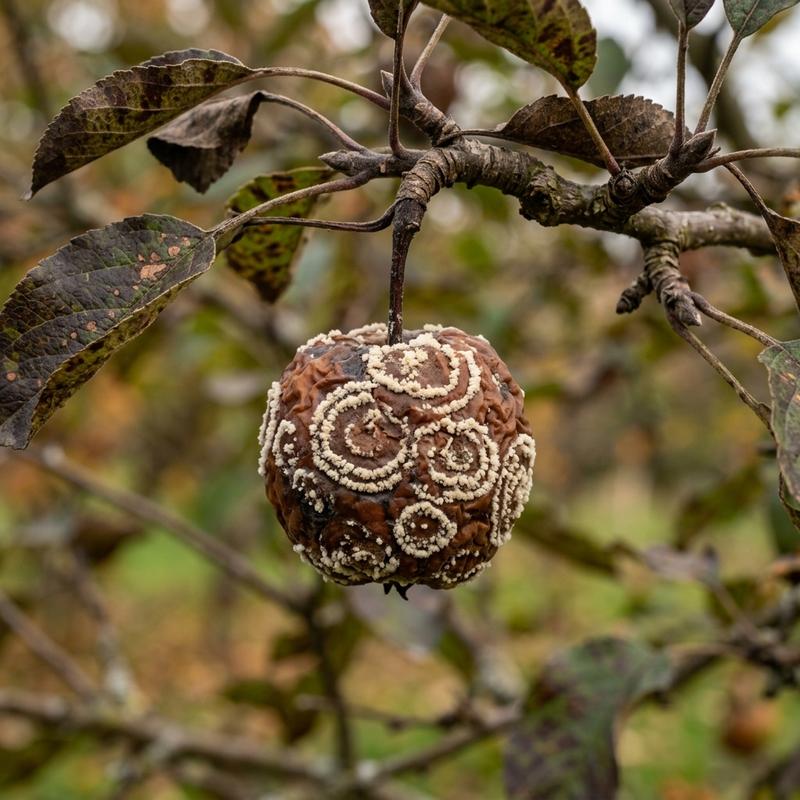
When you find **apples rotting on the tree** before harvest, the primary culprit is **brown rot in apples** (*Monilinia fructigena*). This is the most common and destructive fungal disease in temperate home orchards. Knowing how to identify early symptoms is critical for **preventing apple brown rot** and managing **mummified apples on the tree** before the infection spreads.
How Fungal Brown Rot in Apples Enters the Fruit
The brown rot fungus cannot penetrate unblemished apple skin directly — it needs an entry point. The most common entry routes are: wounds made by codling moth or other insects boring into the fruit; cracks in the skin caused by irregular watering or calcium deficiency (bitter pit); hail damage; or skin-to-skin contact between adjacent fruit during wet weather. A spell of warm, humid weather in late summer, combined with a crop load that brings fruits into contact with each other, creates ideal conditions for rapid spread.
Managing Active Outbreaks of Apples Rotting on the Tree
Remove and destroy (in household waste, not compost) every affected fruit as soon as you see it, including those already on the ground. Pick off and dispose of any hanging mummified fruits from previous years — these contain vast numbers of viable spores. Improve air circulation by removing any fruit touching others. In a severe outbreak close to harvest, harvest unaffected fruit early and store carefully rather than leaving it on the tree to risk further infection.
Hygiene Practices to Prevent Future Fungal Infections
The most important preventive measures are: removing all mummified fruit before bud break in late winter; thinning the crop to prevent fruit touching; controlling codling moth to reduce wound entry points; and ensuring the tree has good air circulation through appropriate pruning. Copper-based fungicide sprays applied from petal fall and repeated through the growing season provide additional protection in orchards with a history of severe brown rot.
Identifying and Removing Brown Rot in Stored Fruit
Brown rot also attacks apples in storage, spreading from infected fruit to neighbouring healthy ones. Check stored fruit every two weeks and immediately remove any showing signs of rot. Never store damaged or insect-affected fruit with undamaged ones — they will infect the whole store.
Protect your apple harvest from brown rot
The SelfEcoFarm apple guide covers the complete brown rot prevention, orchard hygiene and storage management system for a healthy crop from tree to table.
Get the apple guide