Apple Tree Leaves Curling: Treating Rolled and Sticky Foliage
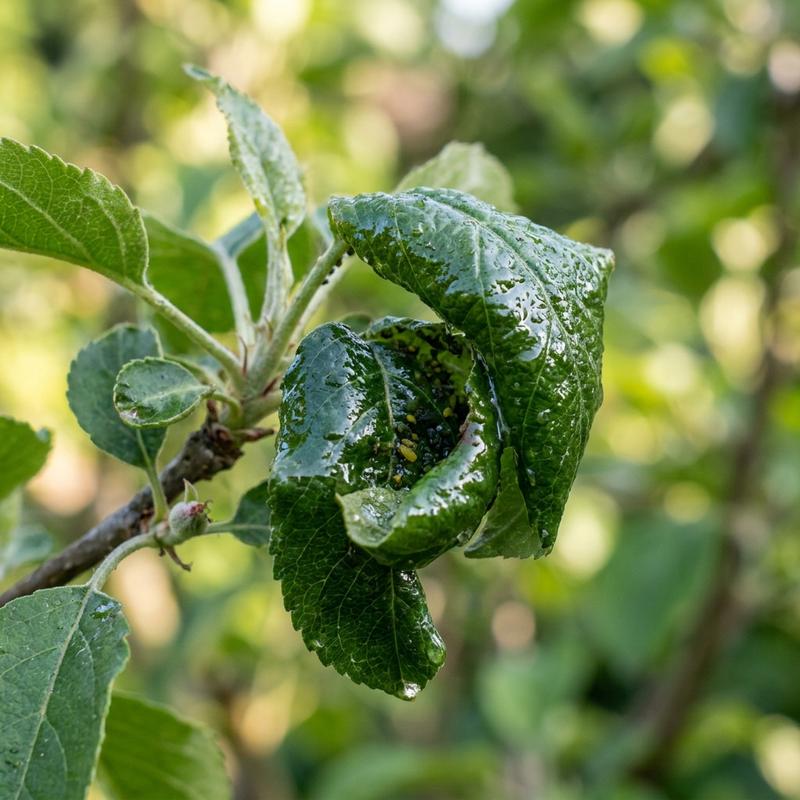
Curled, rolled, or sticky leaves in spring and early summer indicate that an insect pest has colonised the growing tips. If your **apple tree leaves curling** pattern has left you concerned, you are likely dealing with a pest nesting inside. Finding **rolled apple leaves** or **sticky apple leaves** is typically caused by **rosy apple aphid damage** or leafroller caterpillars.
Rosy Apple Aphid Damage Causing Curled Leaves
Rosy apple aphid (Dysaphis plantaginea) overwinters as eggs on apple bark and hatches in spring as buds open. The colonies feed on young leaves and growing tips, causing the leaves to curl tightly inward around the colony, with sticky honeydew coating and often sooty mould developing on the honeydew. Affected growing tips and nearby fruitlets are severely distorted — fruitlets near heavily infested growing tips may develop into very small, misshapen fruit at harvest. In summer, winged forms migrate to plantain weeds and the apple infestation largely disappears. Chemical control is most effective in the crawling stage before buds open — a winter oil wash in January or a pyrethrum spray at the green cluster stage in early spring.
Tortrix Moth Caterpillars Rolling Leaves with Silk
Several tortrix moth species lay eggs on apple leaves. The small green or brown caterpillars roll or bind leaves together with silk and feed inside the rolled shelter. Unroll a suspect leaf to confirm — you will find a small caterpillar (1–2 cm) that wriggles backwards if disturbed. Tortrix caterpillars may also nibble on fruit skin in some years. Pinching rolled leaves to kill the caterpillar inside is an effective low-scale control; the parasitic wasp Trichogramma sp. parasitises tortrix eggs and is encouraged by a diverse garden environment.
How Leaf Rolling Impacts Developing Fruitlets
When aphid infestations are heavy in spring during and after pollination, the affected fruitlets — those developing near heavily infested growing tips — frequently produce misshapen, stunted fruit at harvest. Inspect the tree regularly in May and June and remove the most severely infested growing tips by hand to protect the nearby fruitlets.
Manage spring apple pests before they affect your crop
The SelfEcoFarm apple guide covers the spring pest monitoring, timing and organic control approach for protecting apple growing tips and developing fruit.
Get the apple guide