Apple Tree Powdery Mildew: Identification and Treatment
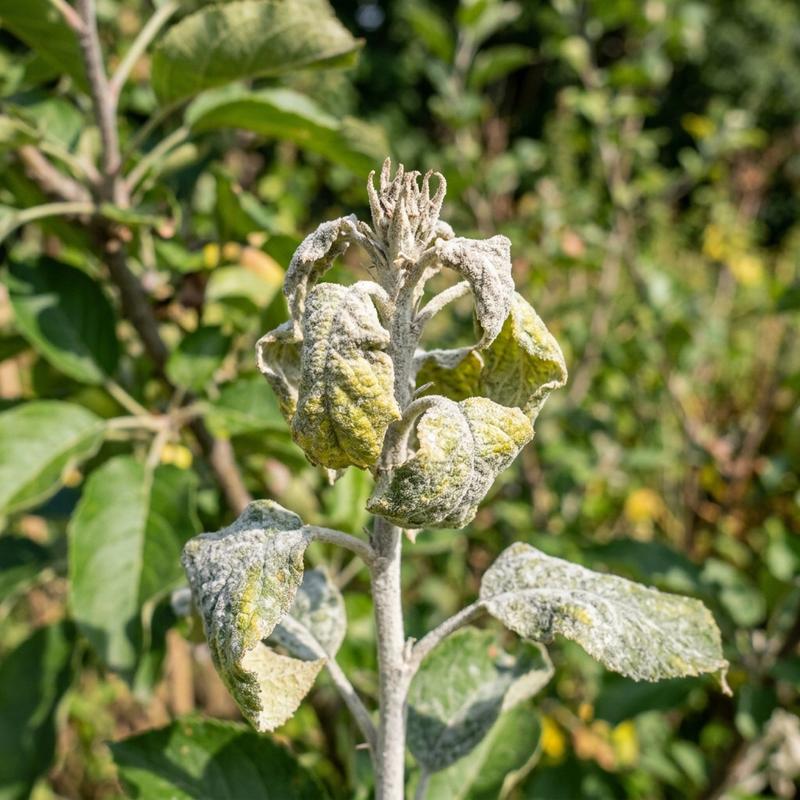
Apple powdery mildew (*Podosphaera leucotricha*) is a persistent fungal disease. It is easily identified by the white coating it produces on young shoot tips, leaves, and buds. For effective **apple powdery mildew treatment** and **apple mildew control**, identifying the early **silvered shoots on your apple tree** is critical before the spores spread.
The Lifecycle and Spread of Apple Tree Powdery Mildew
Apple mildew overwinters in the dormant buds of infected shoots. As buds open in spring, the infected primary shoots emerge already coated in white mildew — these are "primary" or "flag" shoots and are the most important early-season source. The fungus produces airborne spores from these primary infections throughout the growing season, spreading to new healthy shoots and producing secondary infections throughout summer. Unlike scab, mildew does not require leaf wetness — it spreads in dry conditions with high humidity.
Spotting and Pruning Silvered Shoots in Early Spring
In early spring, before leaf expansion, walk around the tree and identify shoots that opened from infected buds — these will show the distinctive grey-white felt on the leaf surfaces before other shoots have had time to become infected. Remove these primary infected shoots to a point below the visible infection plus 5 cm. This single action, done early, reduces secondary spread significantly. Dispose of removed material in household waste.
Organic Powdery Mildew Treatment and Spray Applications
Sulphur-based fungicide spray applied at bud burst and then every ten to fourteen days until midsummer provides effective control. Sulphur is approved for organic use. Avoid applying during hot weather (above 25°C) as sulphur can cause phytotoxic leaf scorch. Potassium bicarbonate spray is an alternative with good mildew efficacy. Do not use the same fungicide class repeatedly — alternate to avoid resistance development.
Selecting Disease-Resistant Apple Varieties
Cox is highly susceptible; Fiesta, Jonagold and many modern varieties show much better mildew resistance. If mildew is a chronic problem, variety choice at replanting is a significant factor.
Control apple mildew and protect your growing tips
The SelfEcoFarm apple guide covers the flag shoot removal, fungicide timing and resistant variety approach for keeping apple mildew under control season after season.
Get the apple guide