Apple Tree Rust Spots: Identification and Treatment
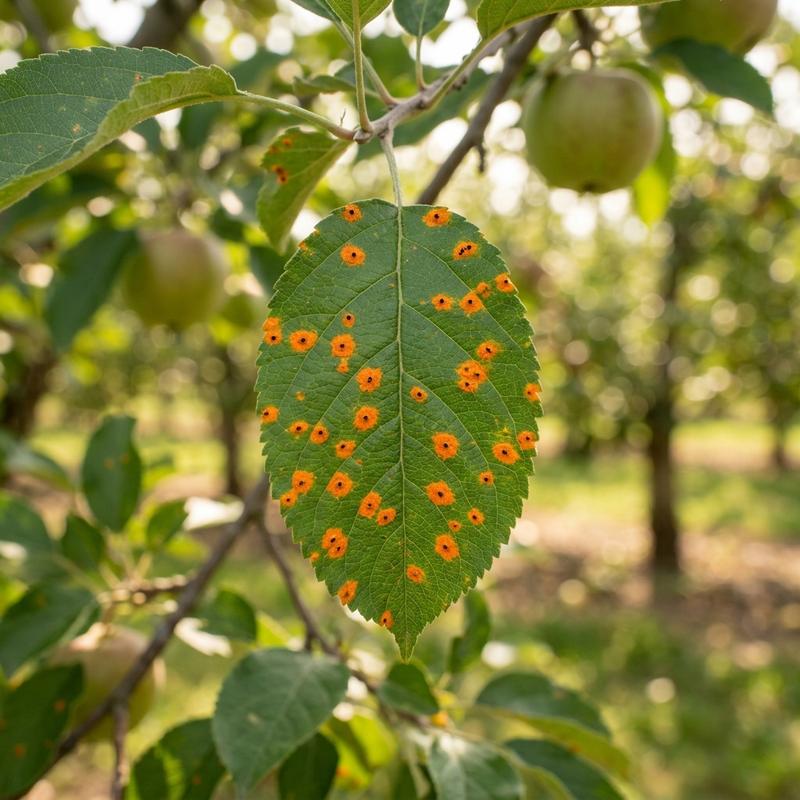
Bright spots on the upper surface of foliage are the unmistakable sign of fungal infection. If you notice **orange spots on apple leaves** or see your **apple tree rust spots** spreading, understanding the host trees is critical. Learning about **cedar-apple rust treatment** and the unique **apple rust lifecycle** helps control the disease before leaves drop.
Understanding the Two-Host Apple Rust Lifecycle
Gymnosporangium rust fungi alternate between two unrelated hosts to complete their lifecycle. In spring, spores from overwintered galls on junipers, ornamental cypresses or related conifers infect apple and pear leaves, producing the distinctive orange upper-surface spots. Later in summer, tubes and cups form on the underside of infected leaves and release spores that travel back to infect the conifer hosts. The rust cannot spread from apple to apple — it must pass through the conifer stage.
Identifying Orange Spots on Apple Leaves and Twigs
Upper leaf surface: bright orange to rust-brown spots, typically 5–15 mm across, sometimes with a yellow halo. The spots may have tiny black dots (spore-producing bodies) in the centre as infection progresses. Underside: corresponding cups, tubes or pustules of orange-rust colour. In heavy infections, leaves yellow prematurely and drop by midsummer, weakening the tree's photosynthetic capacity for the current season.
Effective Cedar-Apple Rust Treatment and Control
Remove any juniper or ornamental cypress plantings within 100–150 metres if rust is a persistent severe problem — this breaks the lifecycle. In practice this is not always possible in suburban gardens where neighbours may have junipers. Apply a sulphur or copper-based fungicide spray from green tip stage through six weeks after petal fall to protect leaves during the infection window. Remove and destroy heavily infected leaves during the season. Choose rust-resistant apple varieties where available.
Long-Term Impact of Rust Fungi on Apple Yields
Light to moderate rust infection causes cosmetic leaf damage but rarely kills a mature tree or significantly reduces that year's crop if managed. Severe, repeated annual infection that causes early leaf drop in July or August significantly reduces the tree's ability to build carbohydrates and can reduce flowering and fruit size in the following year. Persistent management is more important than any single season's intervention.
Manage rust and keep your apple tree productive
The SelfEcoFarm apple guide covers the rust lifecycle, fungicide timing and variety selection that protects apple leaves and keeps the tree productive year after year.
Get the apple guide