Apple Scab Disease: Identification and Treatment
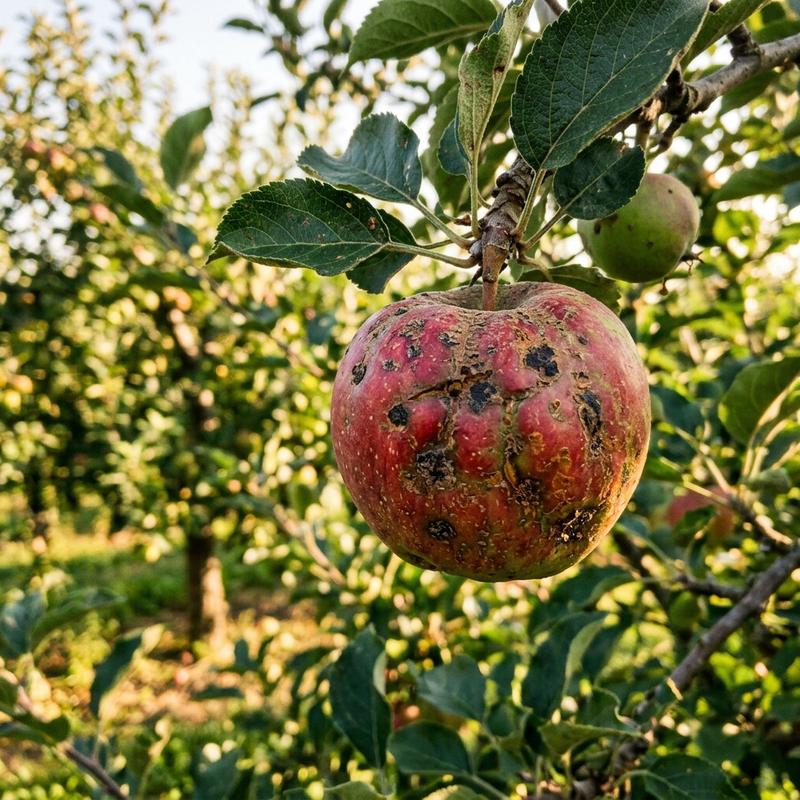
Dark patches on foliage and fruit skin are signs of fungal infection. If you notice **black spots on apple leaves** or rough marks on ripening fruit, the culprit is **apple scab disease**. Proper **apple scab treatment** requires early intervention. Plant **scab resistant apple varieties** to prevent recurring infections.
Understanding the Apple Scab Disease Cycle
The scab fungus overwinters in fallen infected leaves on the ground. In spring, as temperatures rise and leaves open, the overwintered spores are released in wet conditions and infect emerging leaves and developing fruitlets. The earliest infections establish and produce secondary spores that spread the disease further throughout the canopy during wet weather. New infections continue as long as wet conditions persist. The key infection window is from bud burst through about six weeks after petal fall — keeping this period dry or protected is the focus of management.
Identifying Black Spots on Apple Leaves and Fruit
On leaves: dark olive-brown spots that may cause the leaf to yellow and fall. Severe early infection causes defoliation by midsummer, significantly weakening the tree. On fruit: scab causes rough, corky, cracked, or black patches on the skin. Lightly scabbed fruit is perfectly edible after peeling; heavily scabbed fruit may crack, deform and become susceptible to secondary rots.
Organic Apple Scab Treatment and Orchard Hygiene
Rake up and remove (compost or dispose of) fallen leaves in autumn — this removes the primary overwintering source. Apply a fixed copper or sulphur spray from green tip stage through six weeks after petal fall. Improve canopy air circulation through pruning to reduce the humid conditions that favour infection. Avoid overhead irrigation during the infection season.
Selecting Scab Resistant Apple Varieties
Many modern apple varieties carry genetic resistance to scab, making fungicide treatment unnecessary. In the UK, varieties like Scrumptious, Fiesta, and Greensleeves have good scab resistance. In North America, the Freedom, Liberty and Pristine series are highly resistant. If scab is a persistent severe problem, replacing susceptible varieties with resistant ones is the most sustainable solution.
Manage scab and protect your apple tree long-term
The SelfEcoFarm apple guide covers the scab management system, orchard hygiene approach and resistant variety selection for scab-free apple growing.
Get the apple guide