Why Are My Apples Small? Tips to Grow Bigger Fruit
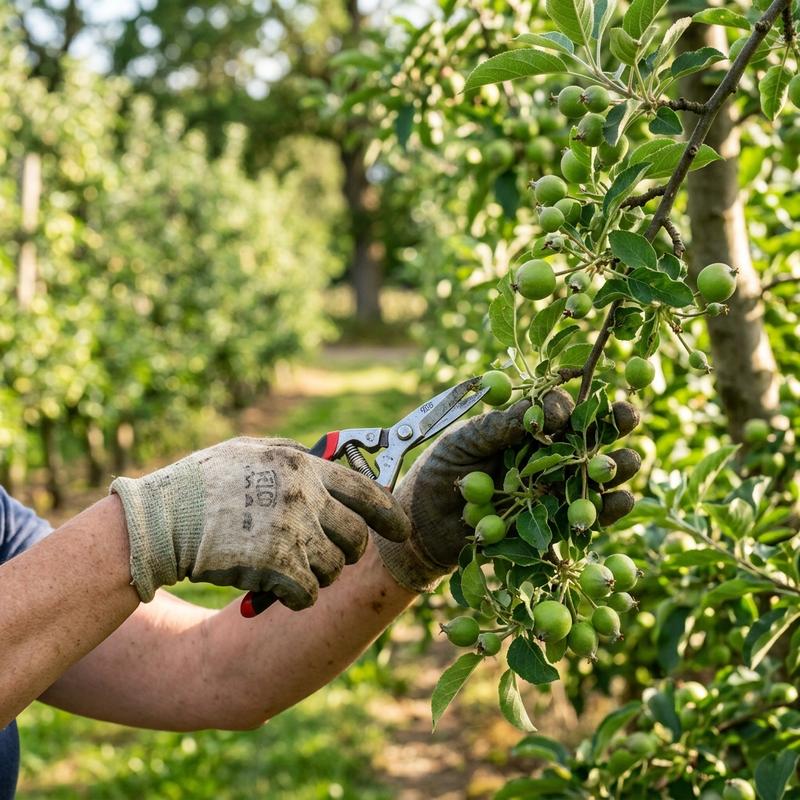
A tree loaded with hundreds of **small underdeveloped apples** at harvest has produced quantity over quality. This is the symptom of an under-thinned crop. If you are asking **why are my apples small**, learning **how to grow bigger apples** and the art of **thinning apple trees** in early summer is the solution.
Too Many Fruits Competing for Tree Resources
An apple tree can only move a fixed amount of water, sugars and nutrients into its fruit each day, determined by its leaf area, root system and the available growing season. If a hundred fruits are sharing those resources, each receives a small fraction — producing small fruit. If thirty fruits are sharing the same resources, each receives more than three times as much — producing large fruit. Reducing the number of fruits is the most direct and reliable route to larger individual apples.
Thinning Apple Trees for Increased Fruit Size
After June drop has finished (typically late June to early July), go through the tree and thin each cluster to leave only the single largest fruitlet — the central "king" fruit in each cluster, which is usually the largest and most symmetrical. Space remaining fruits at least 10–15 cm apart. This feels wasteful but is essential for fruit size. Thin by hand or with scissors. In heavy-cropping years, the improvement from thinning is dramatic.
Summer Drought Restricting Apple Development
Water is the primary constituent of apple flesh. A tree that experiences water stress during the critical cell-division phase of fruit development in early summer (June–July) produces smaller cells and smaller fruit, even with a light crop load. Mulch heavily and water during dry spells from fruitlet set through midsummer to support maximum fruit expansion.
Poor Seed Fertilization and Pollination Limits
Fruit that was poorly pollinated — fertilised by fewer seeds than normal — may be smaller and more asymmetric than well-pollinated fruit. While poorly pollinated fruit will not necessarily be tiny, ensuring good pollination by maintaining a compatible partner variety nearby supports both better fruit set and better fruit size.
Grow large, high-quality apples with the right management
The SelfEcoFarm apple guide covers the thinning method, watering approach and care schedule that consistently produces large, well-formed apples from your home tree.
Get the apple guide