Apple Tree Leaves Turning Yellow: Diagnosis and Solutions
Foliage changing color from rich green to pale yellow indicates a stress response. If you have **apple tree leaves turning yellow** or notice **yellow leaves on apple tree** branches, finding the cause is vital. Correcting **chlorosis on apple tree leaves** or addressing **apple leaf nitrogen deficiency** will restore the tree's health.
Apple Leaf Nitrogen Deficiency: Overall Pale Fade
A general fade from rich green to pale yellow-green across the whole tree, starting with older leaves, is the classic sign of nitrogen shortage. Apple trees growing in grass or in poor, compacted soil are particularly prone — the grass competes aggressively for soil nitrogen. Apply a balanced fruit tree fertiliser in late winter or early spring, raked into the soil surface in a circle extending to the drip line of the branches. Avoid applying nitrogen in late summer as it stimulates soft growth vulnerable to frost.
Alkaline Soil Chlorosis on Apple Tree Leaves
If the leaf blade between the veins turns pale yellow while the veins themselves remain green, the problem is interveinal chlorosis — typically caused by iron or manganese deficiency, or more accurately by alkaline soil conditions that make these nutrients unavailable even when present. This is especially common in trees growing in chalky or heavily limed soils (pH above 7). Apply a chelated iron or manganese fertiliser as a foliar spray or soil drench. Long-term improvement requires soil acidification — adding sulphur chips to the root zone over several years.
Waterlogging and Poor Root Oxygenation Damage
Apple tree roots require oxygen. In waterlogged, poorly drained soil, roots suffocate and cannot supply nutrients to the canopy, causing widespread yellowing that does not respond to feeding. If the soil around the tree is persistently wet and the yellowing started in a wet year, improved drainage is the priority. Install drainage channels, raise the planting site with mounded soil if the tree is young, or in severe cases consider whether the tree can remain in that location.
Natural Autumn Cycle Leaf Drop Timing
Apple trees are deciduous and naturally yellow and drop their leaves in autumn. If the yellowing is occurring in September or October and progressing normally from older leaves, this is the expected annual cycle rather than a problem. No action is needed.
Yellowing Caused by Scab and Powdery Mildew Diseases
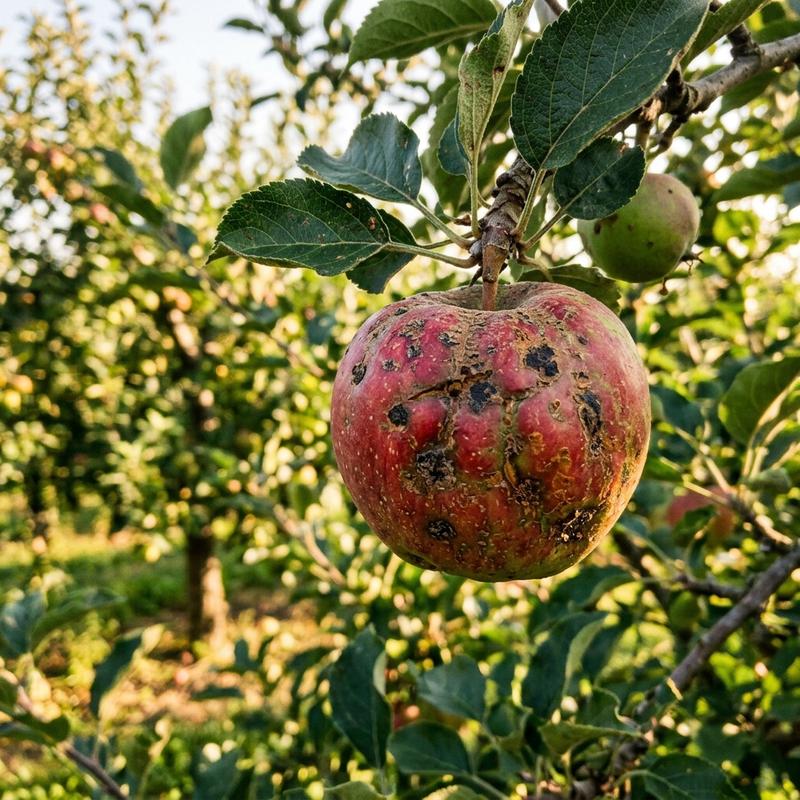
Scab infection causes dark spots on leaves followed by early yellowing and leaf drop. Powdery mildew causes a white coating followed by leaf curl and yellowing. If yellowing is accompanied by visible spots, distortion or powdery residue, a disease problem rather than a nutrient issue is responsible — address the disease directly.
Keep your apple tree healthy and productive
The SelfEcoFarm apple guide covers the complete nutrient management, soil care and disease prevention approach for a healthy, productive apple tree year after year.
Get the apple guide