Cantaloupe Fruits Splitting? (How to Prevent Melon Cracking)
Cantaloupe fruits that crack and split on the vine look dramatic, but the cause is almost always a simple watering problem. Cracking happens when the interior of the fruit expands rapidly — due to a sudden intake of water — faster than the skin can stretch. The skin splits under pressure. Understanding the mechanism makes the prevention straightforward.
Quick Summary: Cantaloupe melons split and crack open on the vine due to irregular watering, heavy rain after a dry spell, calcium deficiency, or allowing fruits to over-mature. To prevent cracking, maintain steady soil moisture with mulch and harvest immediately when you notice the first cracks near the stem (the 'slip').
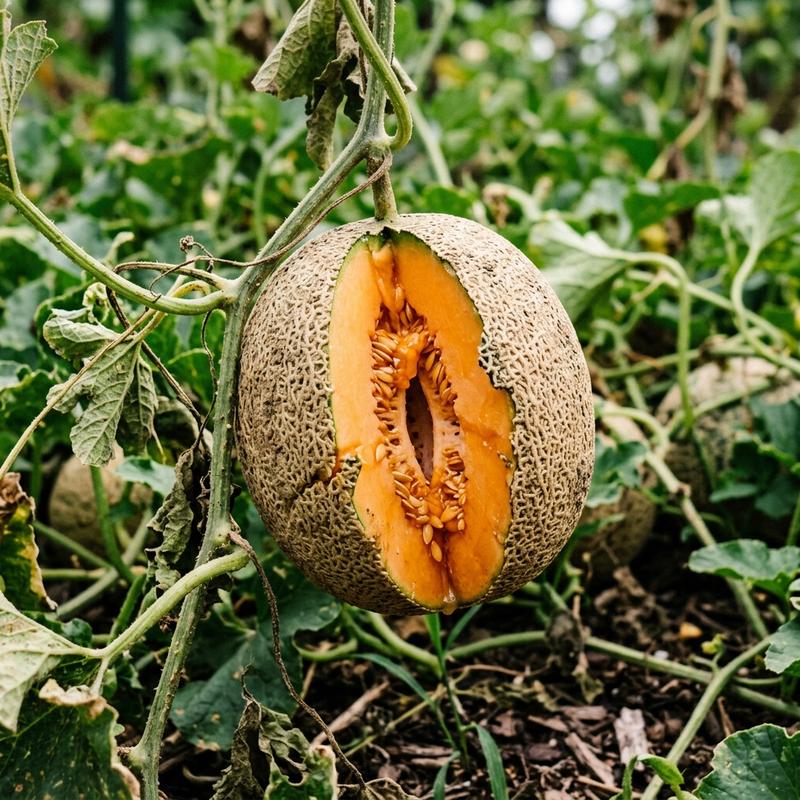
5 Primary Causes of Cantaloupe Splitting and Cracking
1. Irregular watering and soil moisture swings
If the soil dries out significantly and then receives a heavy watering or rainfall, the fruit absorbs a large amount of water rapidly. The cells inside the fruit expand quickly, but the skin — which has toughened and stopped stretching — cannot accommodate the sudden increase in internal pressure. It splits. The fix is to maintain even, consistent soil moisture throughout the fruiting period. Use a thick layer of mulch to buffer soil moisture, water little and often rather than occasionally and heavily, and install drip irrigation if possible to deliver a steady, measured supply.
2. Natural cracking near full ripeness
It is worth noting that some cracking near the stem end of a nearly ripe cantaloupe is normal and even desirable — this is the beginning of the "slip" that indicates the fruit is ready to harvest. If you see fine cracks radiating out from the stem junction on a melon that smells sweet and fragrant, harvest it immediately rather than waiting. Leaving it on the vine past this point will result in deeper cracking and fruit that deteriorates quickly.
3. Calcium deficiency weakening the skin
Calcium is essential for strong cell walls in the fruit skin. When calcium is deficient — either because the soil lacks it or because irregular watering has disrupted its uptake — the skin is weaker and more prone to cracking under normal growth pressure. Apply garden lime or gypsum to the soil before planting, and during fruiting use a calcium-containing foliar feed every two to three weeks to supplement. Keeping watering consistent also improves calcium uptake directly.
4. Allowing fruits to over-mature on the vine
Once a cantaloupe is fully ripe, every additional day on the vine increases cracking risk. The skin continues to toughen and become less elastic while the fruit continues to accumulate water from any rainfall or irrigation. Harvest promptly when all the ripeness indicators are met — fragrance, colour change, and the beginning of the slip — rather than waiting to be completely sure. An over-mature melon on the vine will almost certainly crack, especially after rain.
5. Heavy rainfall after a dry period
Even with good management, a sudden heavy rainstorm after a dry spell can crack melons that were otherwise healthy. If your weather forecast shows heavy rain approaching when your melons are near ripe, consider harvesting a day or two early and allowing them to finish ripening at room temperature indoors. A melon harvested at the beginning of the slip will continue ripening off the vine and will taste far better than one that cracked and partially rotted in the field.