Why Are My Cherries Bitter? (And How to Make Them Sweet)
Cherries that taste sharp, bitter, or disappointingly bland after a full growing season are a common frustration. In most cases, the cause is straightforward—usually relating to harvest timing, light levels, or environmental stress—and completely fixable for future harvests.
Quick Summary: Homegrown cherries usually taste bitter or sour due to five main factors: early harvesting, insufficient sunlight, wet/cool summers, planting an acid variety (like Morello), or drought stress. To fix this, thin out surrounding branches to increase sun exposure, water consistently during ripening, and wait until the fruit gives slightly to pressure before picking.
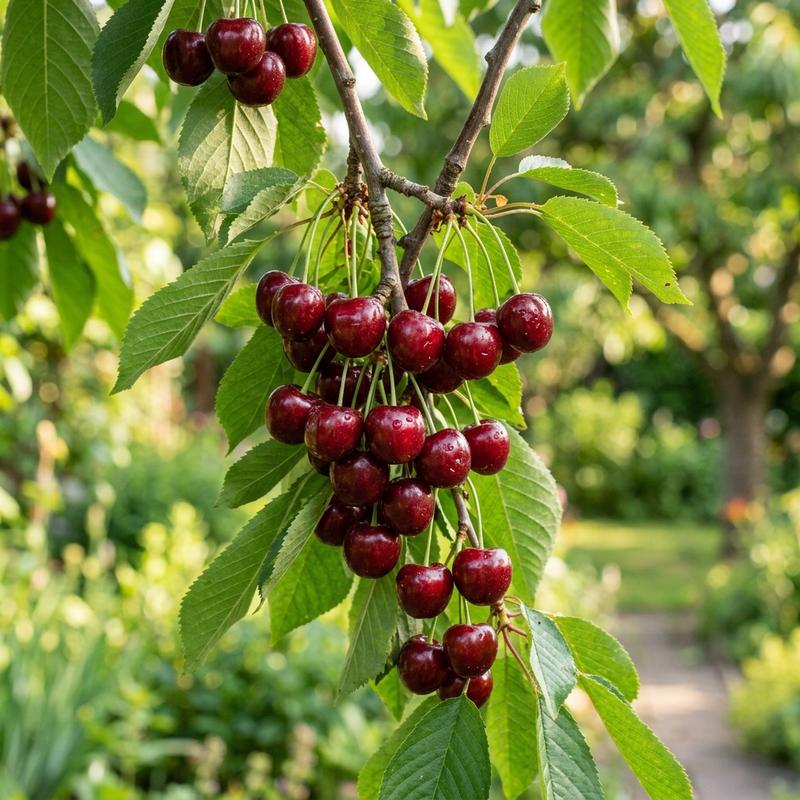
5 Common Reasons Your Cherries Taste Bitter
1. Harvesting too early
This is the single most common reason for bitter cherries. Sweet cherries look fully coloured and seem ready several days before they actually are. A deep-red cherry that is firm to the touch is not yet at peak sweetness — it needs a few more days of warm, sunny weather for the final sugar accumulation to complete. Wait until the cherry gives very slightly when pressed, tastes genuinely sweet on a taste test, and separates from the stalk with minimal force. Colour alone is not a reliable ripeness indicator for most varieties.
2. Insufficient sunlight
Cherry trees in shaded positions, under larger trees or against north-facing walls in temperate climates simply do not receive enough direct sunlight to ripen fruit to its full sugar potential. The photosynthesis required to load sugars into the developing fruit depends on adequate light. If your tree is in partial shade, selectively prune or remove overhanging branches above and around it. For very shaded sites, relocating the tree to a sunnier position may be the only long-term solution.
3. Wet, cool summers
A cold, cloudy summer with limited sunshine hours reduces sugar development across all fruit crops. Cherries grown in poor summers tend to ripen with higher acid and lower sugar content than the same variety in a good summer. There is no management solution for poor weather, but maintaining consistent soil moisture (avoiding waterlogging, which further stresses the tree) and keeping the canopy well-thinned to maximise light penetration through the foliage both help the tree make the best of limited sunshine.
4. Wrong variety — acid cherries versus sweet
It is worth confirming what variety of cherry you are growing. Acid cherries such as Morello and Amarelle are intentionally sharp — they are cooking cherries, not eating cherries, and will never taste sweet straight from the tree. If you planted an unlabelled tree or inherited it with the garden, and the fruit is consistently sharp regardless of ripeness, you may have an acid cherry variety. Acid cherries have their own value for jams, clafoutis and juice, but they are not suitable as a fresh-eating crop.
5. Drought stress limiting sugar accumulation
Cherries stressed by drought during ripening tend to ripen unevenly and with lower sugar content. The tree prioritises survival over fruit quality when water is scarce. Consistent irrigation during the fruit development and ripening period — not just watering when the soil looks dry, but maintaining steady soil moisture throughout — produces noticeably sweeter, more flavourful fruit.