How to Store Cherries to Keep Them Fresh (Best Storage Ways)
Cherries are among the most perishable of all home-grown fruit. A bowl of freshly picked cherries left at room temperature on a warm day will begin to soften and deteriorate within 24 hours. But with the right approach, you can extend fresh cherry life significantly and preserve the surplus from a good harvest for months — whether through refrigeration, freezing or other methods. The key is to handle the fruit as gently as possible and get it cold quickly after picking.
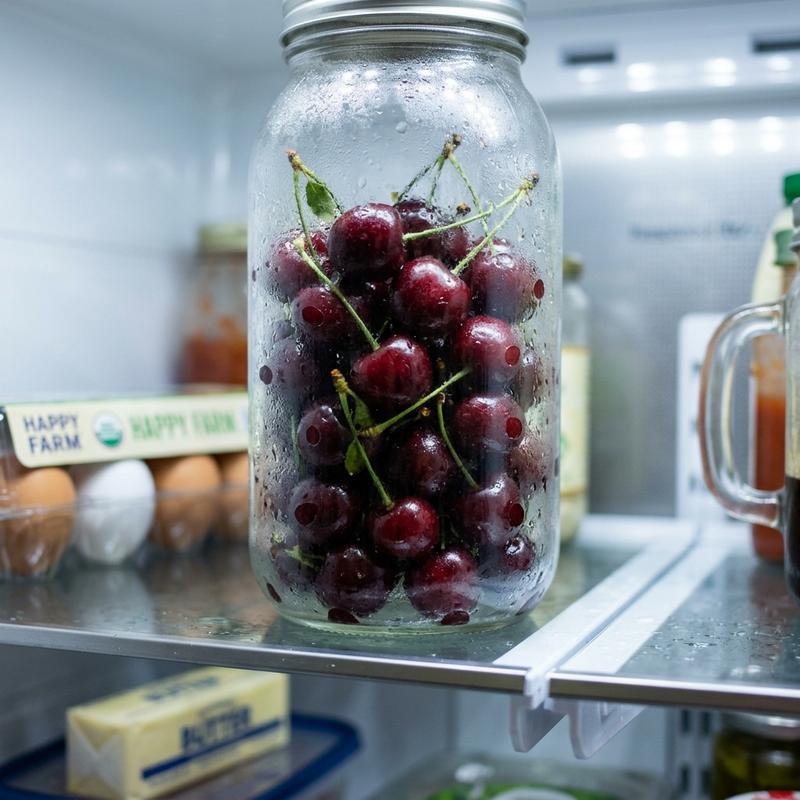
Quick Summary: The best way to store fresh cherries is to **refrigerate them immediately** without washing. Keep them dry with stems attached in a sealed container or ventilated bag in the coldest part of the fridge. They will last **5 to 7 days in the fridge** or up to **12 months in the freezer** if pitted and flash-frozen.
Should Fresh Cherries Be Refrigerated or Left Out?
Fresh cherries are highly temperature-sensitive. Leaving them out on the kitchen counter at room temperature accelerates their metabolism and decay; they can lose more freshness in a single warm afternoon than in a whole week inside the refrigerator. Yes, fresh cherries absolutely need to be refrigerated. Keep them in the coldest part of your refrigerator (ideally at 1–4°C) where they can stay firm, sweet, and juicy.
Should You Wash Cherries Before Storing Them in the Fridge?
One of the most common mistakes is washing cherries before storing them. **Do not wash cherries before putting them in the fridge**. The excess moisture will pool around the stems and skin, triggering mold growth, softening, and rapid deterioration. Instead, store them completely dry. Wash your cherries under cold water only immediately before you serve or eat them.
How Long Do Fresh Cherries Last?
- At room temperature: Sweet and sour cherries will only last for about 24 hours before they start turning soft and losing flavor.
- In the refrigerator: Properly stored dry in a container or zip-top bag, cherries will last for **5 to 7 days** in the fridge.
- In the freezer: Pitted cherries stored in airtight bags will maintain excellent quality for **10 to 12 months**.
5 Best Ways to Store and Preserve Cherries
1. Short-term refrigerator storage
Fresh cherries stored with their stalks intact in a sealed bag or covered container in the coldest part of the refrigerator will keep in good condition for five to seven days. Keep them away from strongly scented foods (like onions or garlic) as cherries can absorb surrounding odors. Check the container daily and remove any that show signs of softening or mold before it spreads to neighboring fruit.
2. Freezing cherries for long-term use
Freezing is the simplest and most effective method for preserving a large surplus. Cherries freeze excellently and maintain their shape, flavor and color well. Wash, dry thoroughly and remove the stalks. For best results, stone (pit) the cherries before freezing — frozen cherries are difficult to stone after thawing, and whole frozen cherries release the stone's tannins on thawing, which can make them slightly bitter. Spread in a single layer on a tray and freeze until solid (flash freezing), then transfer to bags or containers. Frozen cherries keep well for up to twelve months.
3. Drying cherries (Dehydration)
Dried cherries have an intense concentrated flavor and keep for up to a year stored in an airtight container at room temperature. Stone the fresh cherries, halve them, and dry in a food dehydrator at 57°C for 24–36 hours, or in an oven on the lowest setting with the door slightly ajar for 8–12 hours, until leathery but still pliable. Dried cherries are excellent in baking, granola and trail mixes. Acid varieties (Morello, Amarelle) are particularly good dried as their sharp flavor concentrates well.
4. Preserving cherries in syrup or spirits
Bottling cherries in light sugar syrup, or preserving in brandy or Kirsch, produces a preserve that keeps for up to a year in a cool dark place and is outstanding poured over ice cream or used in baking. For syrup bottling, use proper sterilised preserving jars and a water-bath processing method to ensure food safety. For spirits preservation, the high alcohol content does the preserving work without heat treatment.
5. Making cherry jam and compote
Cherry jam requires added pectin (cherries are low in natural pectin) or the addition of lemon juice and a high-pectin fruit such as redcurrants or gooseberries to set reliably. Cherry compote — cherries cooked briefly with sugar and a little lemon juice, not boiled to setting point — is quicker to make, refrigerates for up to two weeks, and also freezes well for later use.