Are Grow Bags a Good Choice for Container Gardening?
Grow bags have been a staple of vegetable growing for decades, and their popularity has surged again with the newer fabric grow bag format. Whether you are using the traditional polythene bags sold at garden centres or the more recent woven fabric versions, grow bags offer a set of advantages that make them genuinely worth considering for specific crops — particularly tomatoes, potatoes, and root vegetables. Understanding the differences between bag types, and the management adjustments they require, helps you get the best from them.
Quick Summary: Fabric grow bags are made of breathable woven polypropylene and really do work. By allowing root air-pruning, they prevent roots from circling and create a healthier, more fibrous root system. They are safe for growing vegetables like tomatoes and potatoes, though they dry out faster and require more frequent watering and liquid feeding than standard plastic pots.
What Are Grow Bags and Do They Really Work?
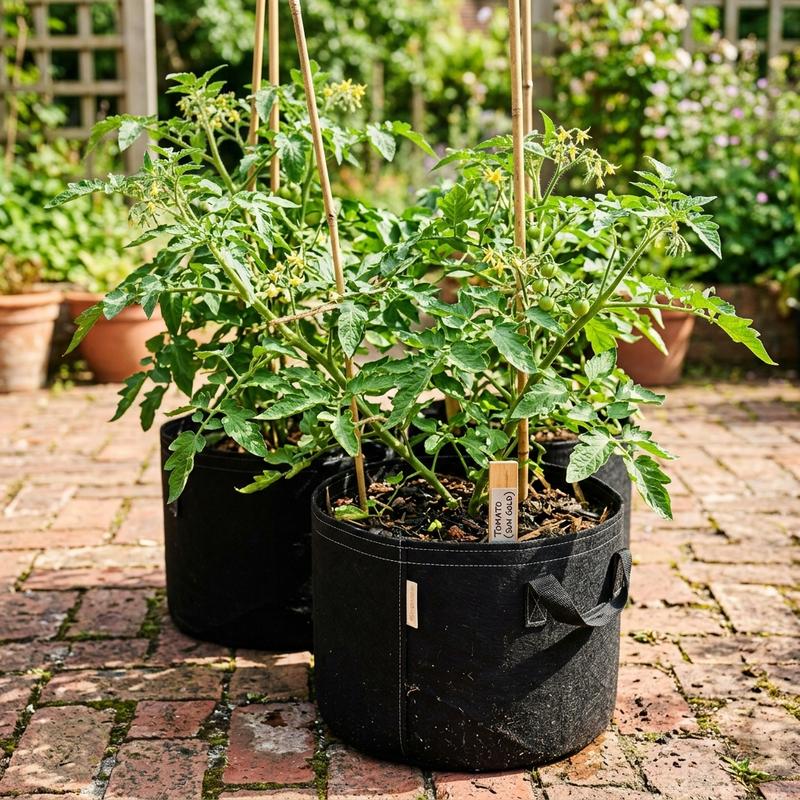
Grow bags are planting containers made from flexible materials rather than rigid plastic, terracotta, or wood. Originally introduced as simple polythene sacks, they have evolved into high-performance fabric pots. Fabric grow bags allow air to penetrate the soil from all directions, which naturally air-prunes plant roots, preventing them from becoming root-bound or circling. They regulate soil temperature and drainage significantly better than plastic pots, making them highly effective for backyard growers.
Step-by-Step Guide to Growing Vegetables in Grow Bags
1. Traditional polythene grow bags
The classic polythene grow bag is inexpensive, widely available, and works well for tomatoes, cucumbers, and courgettes. The bag is laid flat, slits are cut in the top surface, and plants are inserted directly into the growing mix. The shallow depth of the bag encourages a wide, spreading root system. The main challenge is watering — the growing mix dries unevenly in a flat bag, with the area directly under the plant drying faster than the edges. Placing an upturned plastic bottle with the bottom cut off into each planting hole creates a watering funnel that directs water directly to the root zone rather than pooling on the surface.
2. Fabric grow bags: The better option for most crops
Fabric grow bags — made from breathable woven polypropylene — have significant advantages over polythene bags. The breathable walls allow air to reach roots on all sides, and when roots reach the bag wall they are exposed to air and naturally "air-pruned," stopping at the wall rather than circling and spiralling as they do in solid containers. This produces a dense, branching root system that is far more efficient at taking up water and nutrients. Fabric bags also regulate temperature better, staying cooler than dark plastic in summer and draining far more freely. They come in sizes from 3 to 50 litres and fold flat for storage when not in use.
3. Best vegetables to grow in grow bags
Tomatoes — particularly indeterminate cordon types — perform exceptionally well in 20–30 litre fabric grow bags. Potatoes are ideally suited to tall fabric bags that can be rolled up in stages as the plant grows, allowing you to earth up without a rigid container. Root vegetables including carrots and beetroot grow in deep, narrow fabric bags that can be custom-sized. Strawberries can be grown in flat fabric bags placed on raised surfaces for easy harvest and protection from ground-level slugs. Herbs in small fabric bags have excellent drainage and air to roots.
4. Watering and feeding in grow bags
Fabric grow bags dry out significantly faster than solid pots of similar volume because of evaporation from all surfaces, including the walls. This means more frequent watering is needed, particularly in hot, sunny, or windy conditions. Check fabric bags daily in summer and be prepared to water twice a day for large, actively fruiting plants. Because frequent watering flushes nutrients out quickly, begin a regular liquid feeding programme four to six weeks after planting. Stand fabric bags in a shallow tray to catch drainage and reduce the frequency of watering slightly.
5. Reusing and composting grow bags
Polythene grow bags should be used for one season only — used growing mix from previous crops can harbour pathogens. The spent growing mix can be emptied onto garden beds as a soil improver. Fabric grow bags can be used for three to five seasons if rinsed and dried between seasons. Eventually the fabric degrades in UV light and loses structural integrity. Most fabric grow bags are technically compostable, though they take several years to fully break down in a standard compost heap.