Should You Feed Plants in Autumn? What Works and What Causes Harm
Autumn feeding is a topic where many gardeners go wrong, often with the best intentions. The instinct to give plants one last boost before winter can lead to applying nitrogen-rich products in September or October — which does exactly the opposite of what plants need at that time of year. Understanding what autumn feeding is actually for, and what it must not do, protects your garden going into the cold months.
Quick Summary: In autumn, avoid high-nitrogen fertilizers which force weak, frost-vulnerable new growth. Instead, feed with potassium (sulfate of potash) to ripen wood and harden cell walls, and phosphorus (bone meal) to stimulate root expansion. Apply well-rotted manure or compost mulches as slow-release winter feeds.
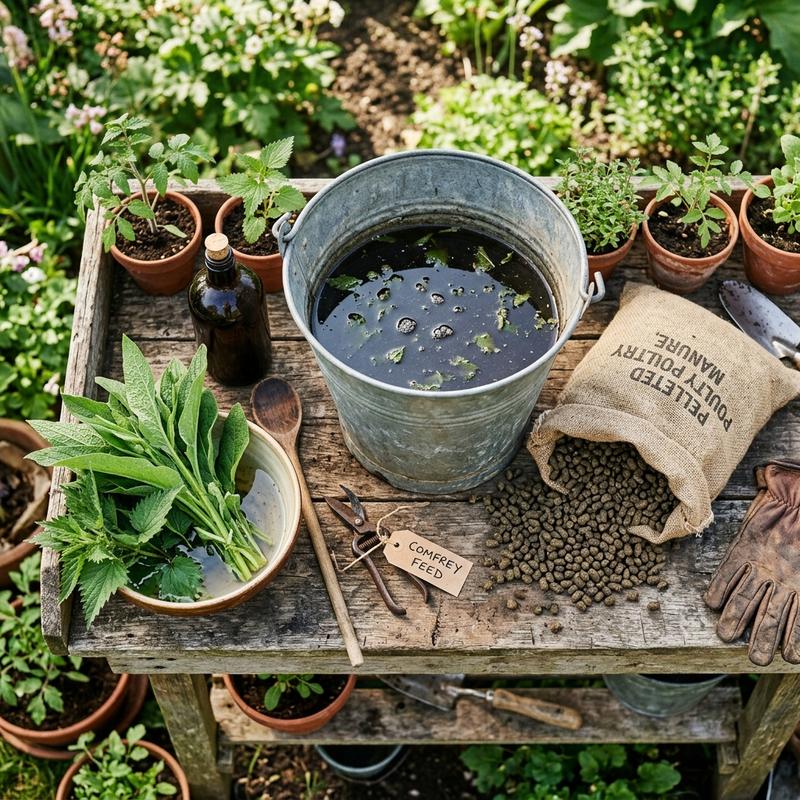
The Guide to Safe Autumn Plant Feeding
1. The Biological Goal of Autumn Feeding
In autumn, the biological priority for most perennial plants is hardening up and preparing for winter dormancy. Cell walls need to be strong, wood needs to be ripe and firm, roots need to be able to function at low temperatures, and the plant needs to store energy rather than burn it making new growth. Any feeding in autumn should support these processes — not undermine them.
2. Why You Must Avoid High-Nitrogen Feeds
Nitrogen is the enemy of autumn preparation. A high-nitrogen feed applied in September or October tells the plant to produce soft, lush new growth. This growth is thin-walled, water-rich and extremely vulnerable to frost. It also signals to the plant that it is not time to slow down and harden off. The result is frost-damaged shoots, dieback, and plants entering winter in a weakened state. Stop all nitrogen feeding by the end of August at the latest for most garden plants.
3. Beneficial Nutrients: Potassium and Phosphorus
Potassium and phosphorus are the nutrients that genuinely help in autumn:
- Potassium (sulphate of potash): strengthens cell walls, improves frost resistance and supports wood ripening on fruit trees and shrubs. Applied in August–September, it is one of the best investments for winter survival and next season's crop.
- Phosphorus: supports root development, which continues into autumn even after top growth slows. An autumn feed with bone meal or superphosphate encourages roots to explore new soil before ground temperatures drop too low.
- Autumn lawn fertiliser: specifically formulated with low nitrogen and higher phosphorus and potassium — promotes root depth and improves resistance to disease and frost in grass.
4. Slow-Release Organic Feeding with Compost and Manure
One of the most valuable autumn tasks is applying well-rotted manure or compost as a surface mulch across cleared beds and around perennial plants. The slow-release nutrients will be absorbed gradually over the autumn and winter, and by spring the organic matter will have improved soil structure significantly. This is low-risk, broadly beneficial and requires no special timing — any point in autumn after harvest works.
5. When to Stop Feeding Garden Plants Completely
By October, all liquid feeding of garden plants should have stopped. Granular products applied before this date will still be slowly releasing through the soil but will not cause the same problem as a direct autumn application. From October to February, let the garden rest and prepare naturally for the season ahead.