Why Do My Grapevines Have White Powdery Mildew?
Powdery mildew (Erysiphe necator, also known as Uncinula necator) is one of the most prevalent fungal diseases of grapevines worldwide, and home growers in warm, dry summers will almost inevitably encounter it at some point. Unlike many fungal diseases that spread in wet conditions, grape powdery mildew actually thrives in warm, dry weather with moderate humidity — making it particularly problematic in greenhouse-grown vines and in sheltered wall positions. Early identification and prompt treatment prevent it from ruining the crop.
Quick Summary: Powdery mildew of grapes is a white, powdery fungus that spreads in warm, dry weather. To treat grape powdery mildew, spray the vines with wettable sulphur (organic-approved) or a potassium bicarbonate solution as soon as you see white spots on grape leaves or grapes. Prevent future outbreaks through open canopy pruning.
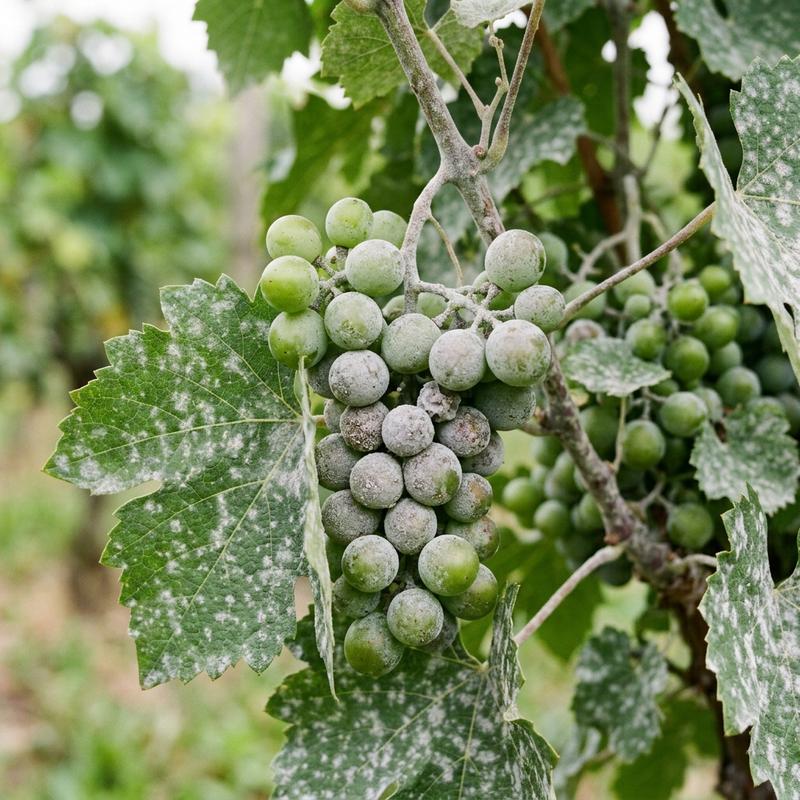
What is Powdery Mildew on Grapes and Grapevines?
Often mistaken for a simple "white fungus" or "white powder" on grapes, powdery mildew is a specialized grapevine fungus that attacks all green parts of the vine. If you spot white spots on grape leaves or a dusty, greyish-white coating on developing berries, the fungus has already taken hold. Left untreated, it will stunt vine growth, cause leaves to curl, and lead to split, cracked fruit that rots before harvesting.
How to Treat Powdery Mildew on Grapes (Best Mildew Treatments)
1. Treatment with wettable sulphur
Wettable sulphur is the traditional and most effective treatment for grape powdery mildew, and it is approved for organic use. Apply as a spray to all surfaces of the vine as soon as you see the first signs of infection, and repeat every 10–14 days while conditions remain warm and humid. Do not apply sulphur when temperatures exceed 30°C (85°F) as it can cause leaf scorch, and do not apply within four weeks of a neem or horticultural oil treatment.
2. Potassium bicarbonate as a warm-weather alternative
A spray of potassium bicarbonate raises the pH on the leaf surface to a level that the fungus cannot tolerate. It is less persistent than sulphur but effective as a knockdown treatment on light to moderate infections and is safe to apply in warm weather. Some growers alternate bicarbonate and sulphur treatments to reduce resistance risk.
3. Prevention through canopy management and pruning
Powdery mildew overwinters in dormant buds and bark, and spreads most rapidly in a dense canopy where air movement is limited. Summer pruning — removing crowded laterals and opening the canopy — reduces the warm, stagnant microclimate the fungus prefers. For greenhouse vines, ventilate on warm days and avoid the combination of high temperature and high humidity.
4. Growing disease-resistant grape varieties
Some modern grape varieties carry partial resistance to powdery mildew — particularly PIWI varieties such as Regent, Solaris, and Villaris. Growing a resistant variety does not eliminate the need for monitoring, but it dramatically reduces the frequency and severity of outbreaks and is a good long-term solution for growers who prefer to minimise spraying.
5. Powdery mildew vs. downy mildew on grapes
It is crucial to distinguish powdery mildew from downy mildew because their treatments differ. Powdery mildew appears as dry, dusty white spots on both the upper and lower leaf surfaces, and spreads best in dry, humid weather. Downy mildew, however, creates yellowish, oily spots on top of the leaves and a thick, cottony growth only on the undersides, spreading exclusively in wet, rainy conditions.