Container Herb Gardening: Best Herbs to Grow in Pots
Container herb growing is ideal for small gardens, patios, balconies, and anyone who wants fresh culinary herbs close to the kitchen door. Almost every herb grows well in a pot — and some, like mint, actually perform better when their roots are contained. The key to success is choosing the right pot size, getting the compost right, and understanding how container-grown herbs differ from those in the ground.
Quick Summary: To grow herbs in containers successfully, choose pots with a minimum 20 cm diameter with drainage holes. Mix 70% peat-free compost with 30% grit or perlite to ensure drainage. Group plants with similar water needs together: keep drought-tolerant Mediterranean herbs (rosemary, thyme, sage) separate from moisture-loving herbs (basil, parsley, mint).
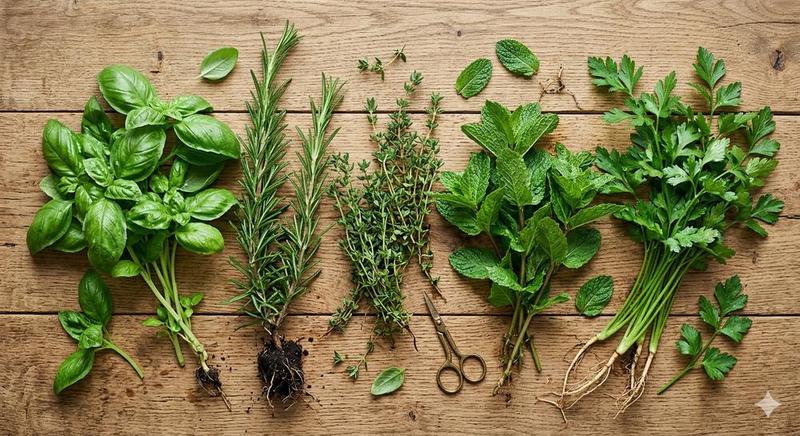
How to Start a Container Herb Garden
Choosing the Right Pot
Container size matters more than most growers realise. A small pot dries out rapidly, restricts root growth, and reduces yields significantly. For individual herbs, use a minimum 20 cm diameter pot for most herbs and 30 cm for vigorous ones like mint, basil, or parsley. For a mixed herb container, use a large planter at least 40–50 cm wide and 30 cm deep. Drainage holes are essential — no drainage hole means waterlogged roots and dead plants. Terracotta pots are excellent for Mediterranean herbs (thyme, rosemary, sage) because they are porous and dry out faster; plastic pots retain moisture longer and suit moisture-lovers like basil, chives, and parsley.
The Right Compost Mix
For most herbs, mix a quality peat-free multipurpose compost with 20–30% horticultural grit or perlite to improve drainage. This is especially important for Mediterranean herbs that originate in free-draining soils. For moisture-loving herbs (basil, chives, parsley), standard multipurpose compost alone is usually adequate. Avoid very rich or heavy garden soil in containers — it compacts easily and drains poorly. Refresh the top layer of compost each spring or repot into fresh compost every two years.
Watering Container Herbs
Container herbs dry out much faster than those in the ground, especially in warm weather and if the pot is in a sunny spot. In summer, some containers may need daily watering; in winter, once a week or less is usually sufficient. The best way to check is to push your finger into the compost — water when the top centimetre is dry. Water thoroughly until it drains from the bottom, then wait until the surface dries out again before watering. Inconsistent watering — letting pots dry out completely then flooding them — stresses plants and triggers bolting in annual herbs.
Feeding Container Herbs
Container compost runs out of nutrients faster than garden soil — typically after six to eight weeks for a new potting mix. Feed with a balanced liquid fertiliser every two weeks during the growing season (spring to autumn). Mediterranean herbs prefer a lower-nitrogen feed to prevent lush, soft growth; leafy herbs like basil and parsley respond better to a nitrogen-rich feed that encourages leaf production. Avoid over-feeding rosemary and thyme — excess nutrients reduce the concentration of the essential oils that give them their flavour.
Grouping Herbs in Containers
It is tempting to mix all your herbs into one pot, but herbs have different water and soil needs. Group Mediterranean drought-tolerant herbs together: thyme, rosemary, oregano, and sage all want the same free-draining, drier conditions. Keep moisture-lovers separate: basil, chives, parsley, and mint all want more consistent watering. Never mix mint with other herbs in the same pot — it will crowd out everything else within a season.