Why Are My Pears So Small? (4 Ways to Grow Bigger Fruit)
Pear trees that carry large numbers of fruit but where every pear ends up small, or trees where even a light crop produces disappointingly undersized fruit, are telling you that something is limiting the resources available to each developing pear. Identifying and correcting that limiting factor is usually straightforward once you know what to look for.
Quick Summary: Homegrown pears stay small due to four main causes: overcropping (too many fruits), poor pollination, drought stress during summer, or a potassium deficiency. You can fix this by hand-thinning fruitlets in early summer, watering deeply during dry spells, and applying potassium sulfate.
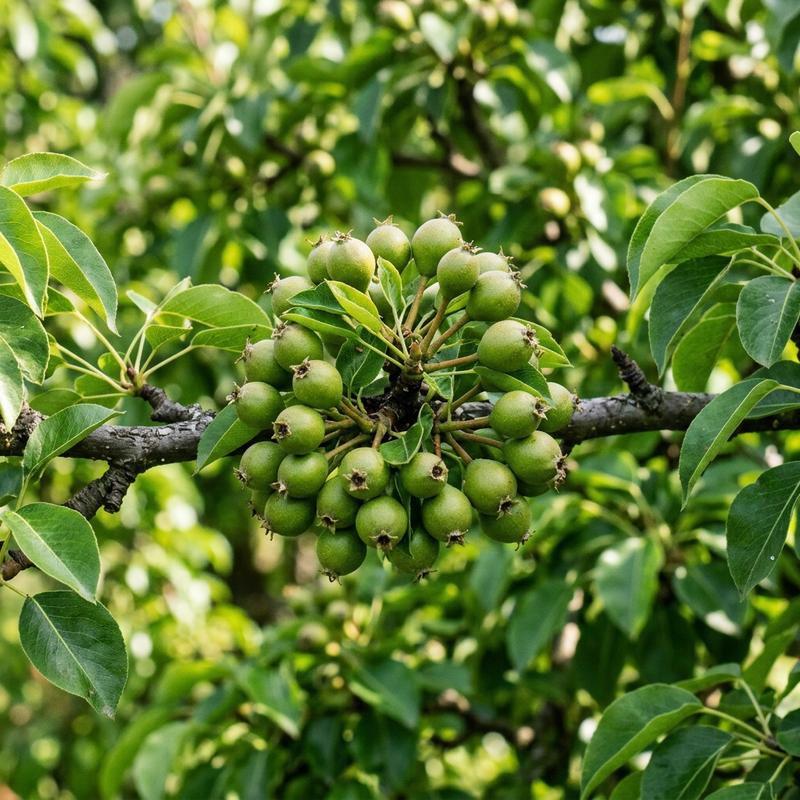
4 Common Reasons for Underdeveloped and Small Pears
1. Too many fruits (Overcropping)
A pear tree can only ripen a finite amount of fruit given its leaf area, root system and the season's resources. When too many fruitlets set after a good pollination year, the tree cannot supply each one with enough energy and water to grow to full size — they all stay small. Hand thinning in late May to early June, after the natural June drop has finished, significantly increases the size of the remaining fruit. Thin dessert varieties to one fruit per spur, or one fruit every 15–20 cm along a branch. This feels counterintuitive but consistently produces larger, better-quality fruit.
2. Poor pollination
Pears that were pollinated by only a small amount of pollen or very briefly tend to have fewer seeds inside than well-pollinated fruit. Seed number drives fruit size because developing seeds produce hormones (auxins) that stimulate cell division in the surrounding flesh. A fruit with two seeds develops significantly smaller than one with five seeds. Cold, wet or windy weather during blossom week reduces pollinator activity and results in poor pollination and small fruit. If poor pollination is a recurring problem, consider introducing a beehive nearby or hand-pollinating using a soft brush during the first warm flowering days.
3. Drought stress during fruit development
Fruit size depends heavily on cell expansion in the months after set, and cell expansion requires water. Dry conditions in June and July — the period when pears grow most rapidly — result in smaller fruit because cells cannot expand fully. Mulch heavily around the root zone with compost or wood chip to conserve soil moisture, and water deeply during extended dry spells rather than surface-wetting frequently.
4. Potassium deficiency
Potassium is directly involved in the transport of sugars from leaves into developing fruit. A shortage of potassium produces small, poorly coloured fruit with insipid flavour. Potassium deficiency is confirmed by leaf scorch — a brown burning margin on leaf edges — and is most common on sandy, light soils that leach potassium rapidly. Apply sulphate of potash in late autumn or early spring as a routine feed for fruiting trees.