How to Grow Chillies Indoors from Seed: A Step-by-Step Guide
Chillies are among the most rewarding crops to grow from seed, but they demand more from the gardener than almost any other vegetable. They need the earliest start, the highest germination temperature, and the most patience. Get these conditions right and the results — hundreds of chillies per plant — are spectacular.
Quick Summary: You can easily grow chillies indoors by sowing seeds in **January or February** using a heated propagator set to **25–30°C (77–86°F)**. Chilli germination time is typically **10 to 21 days**. Once germinated, place seedlings in a bright window or under grow lights for 16 hours a day and keep the room at 18–20°C.
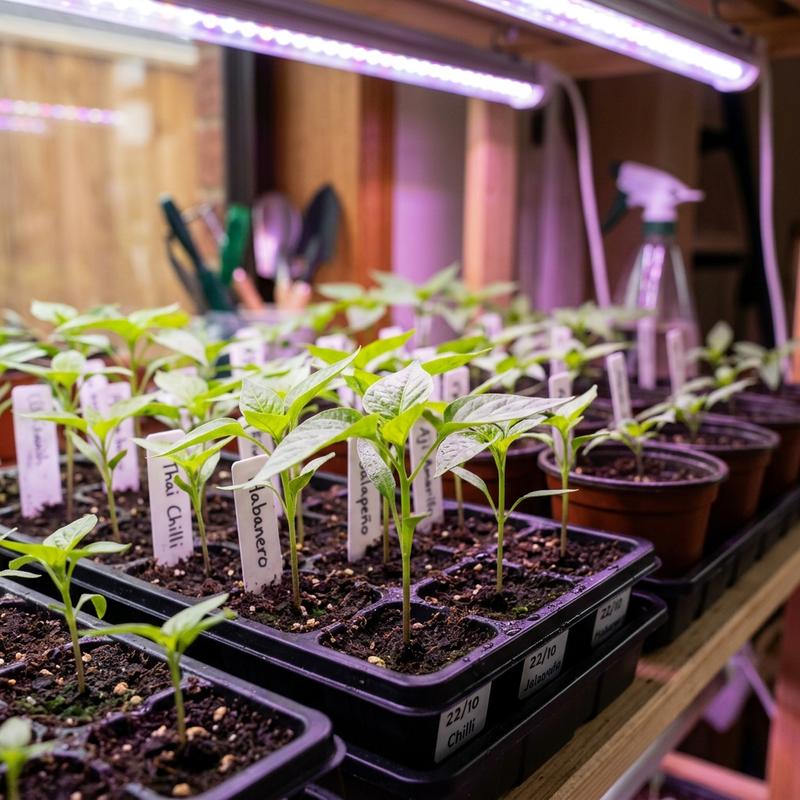
Can You Grow Chillies Indoors?
Yes, growing chillies indoors is highly successful and a fantastic way to secure a harvest in cooler climates. Because chillies are compact plants compared to tomatoes, they thrive on window sills, in conservatories, or under grow lights. Growing chillies inside also protects them from early spring frosts and lets you control their temperature, ensuring they get the continuous warmth they need to mature.
Step-by-Step Guide to Growing Chilli Plants Indoors
1. When to sow chilli seeds indoors
Sow hot chillies in January or early February — 12 weeks or more before your last frost date. The hottest varieties (habaneros, scotch bonnets, superhots like Carolina Reapers) have even longer growing seasons and should ideally go in by mid-January. Starting later means the plants may not have time to produce a full crop before autumn cold arrives.
2. Ideal germination temperature and chilli germination time
Chillies need 25–30 °C (77–86 °F) at compost level for best germination. At room temperature (18–20 °C) germination will be slow, erratic, and frustrating. A heated propagator is close to essential. Set the thermostat to 27–28 °C and sow seeds 5–6 mm deep in individual cells or pots. Germination takes 10–21 days even with heat; some superhot varieties can take 4–6 weeks.
3. Pre-germinating with the damp kitchen paper method
Many experienced chilli growers pre-germinate seeds on damp kitchen paper kept in a warm place (25–28 °C) before potting them. Place seeds between layers of damp paper in a sealed bag or container. Check daily — as soon as the white radicle (root tip) appears (usually 7–14 days), transfer to individual pots very carefully, root pointing down, just below the surface. This method gives you visibility over which seeds have germinated and avoids sowing ungerminated seeds into precious space.
4. Care for indoor chilli seedlings (Lighting and feeding)
Once germinated, chilli seedlings grow slowly but steadily. Keep them in the brightest possible light (16 hours per day under grow lights is ideal), at 18–20 °C in the day and no lower than 15 °C at night. Feed with very dilute balanced fertiliser from the third true leaf stage. Be patient — slow initial growth is normal for chillies. They accelerate noticeably once temperatures warm up in spring.
5. Overwintering indoor chilli plants as perennials
Unlike tomatoes, chillies are perennial and can be overwintered indoors. A chilli plant brought inside before the first frost, cut back to its main framework, and kept at 10–12 °C through winter will burst into growth early the following spring and produce an even heavier crop in year two. This is worth knowing before you start too many seeds — a single overwintered plant can replace three or four new seedlings.