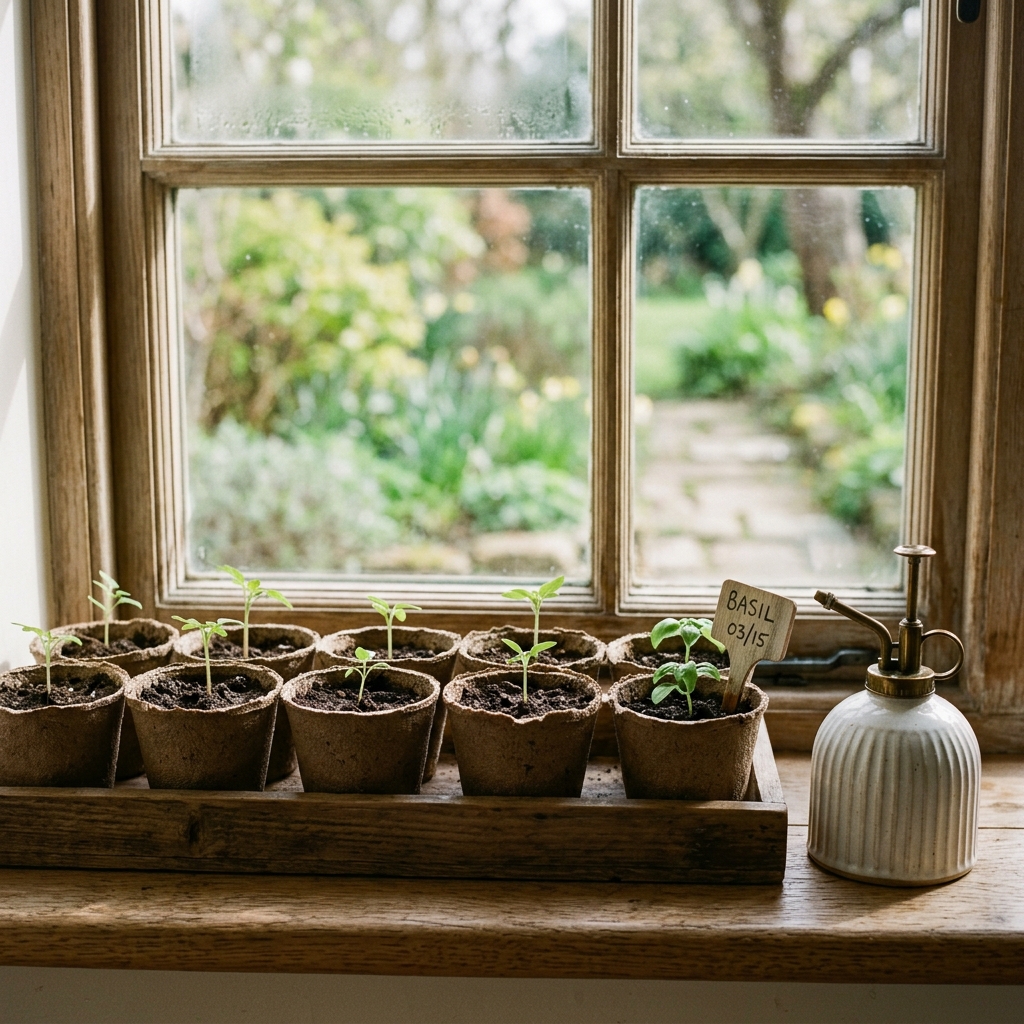
The key to March is knowing that your garden splits into two completely different lists: what goes indoors now, and what goes directly outside. Confusing them is the most common mistake of the season. Get the lists right and March becomes one of the most satisfying months in the gardening year.
Start These Indoors Now
These plants want warmth to germinate. They need weeks of indoor growing before they are anywhere near ready for the garden. Starting them now gives them that time.
- Tomatoes — Sow indoors under a light or on a warm windowsill. They need 6–8 weeks before transplanting out, so March is exactly right. If you are thinking through varieties, our Tomato Growing Guide walks through everything from seed choice to final harvest.
- Peppers & Chillies — Slow germinators that need warmth. Start them now and they will just be ready in time. The Pepper Guide covers starting conditions in detail.
- Leeks — March is the ideal window. Sow thinly in trays, keep indoors, and transplant out in early summer. See our Leek Guide for timing and spacing.
- Onions — If growing from seed (not sets), now is the time. The Onion Guide covers both routes.
- Broccoli & Cauliflower — Start indoors in March for planting out in April or May. The Broccoli & Cauliflower Guide explains the hardening-off process.
- Herbs — especially Basil — Basil hates cold and will sulk in any soil below 18°C. Start it indoors in March and keep it warm. Other herbs like parsley and chives are tougher. The Herb Guide covers each one individually.
Starting from seed is the decision that multiplies your variety choices beyond anything a garden centre shelf can offer. The transplant bench gives you what is selling that week. Seeds give you everything. If you want to stay organised across the whole season, the Tomato Growing Checklist is built to track every stage from sowing to harvest.
Sow These Directly Outside
These crops do not just tolerate cold soil — they prefer it. Starting them too late, once warmth has arrived, gives you plants that bolt before you have had a proper harvest. March is their season.
- Peas — One of the best things you can do in March. Push them into the ground and they will germinate reliably. The Pea Guide covers spacing, support, and succession sowing. If you want a full season planner, the Pea Growing Checklist has you covered.
- Spinach & Kale — Hardy, fast, and genuinely happy in cold weather. Direct sow now and you will be harvesting within weeks. See the Spinach & Kale Guide.
- Lettuce — Sow under cloches or directly into a sheltered bed. The Lettuce Guide explains which varieties are best for early season.
- Radishes — The fastest crop in the garden. Sow now and you can be harvesting in three to four weeks. Perfect for filling gaps between slower crops. See the Radish Guide.
- Beetroot — Direct sow from mid-March in most areas. The Beet Guide covers sowing depth, thinning, and varieties.
Wait On These
Some plants have no patience for cold. Putting them out now means stress, stalled growth, and possibly starting over. These can wait until after your last frost:
- Cucumbers — need warm soil (at least 18°C)
- Zucchini & Squash — frost will kill them overnight
- Watermelon & Melon — absolutely not yet
- Sweetcorn — needs warm nights to germinate well
There is no shortcut here. A tomato planted into cold soil in March will sit still while a tomato planted into warm soil in late April walks past it. The calendar date is a rough guide. The soil temperature is the truth.
One More Thing: Write It Down
Every March you will think you will remember what you sowed, when, and where. You will not. A quick note on sowing dates, seed varieties, and first germination times is the most useful thing you can do for next year's version of yourself. Our growing checklists are built exactly for this — one for each plant, designed to track the whole season in one place. You will find them all in the SelfEcoFarm shop.
Posted March 30, 2026